Somali Referee Omar Artan Turns World Cup Exclusion Into UEFA Super Cup History
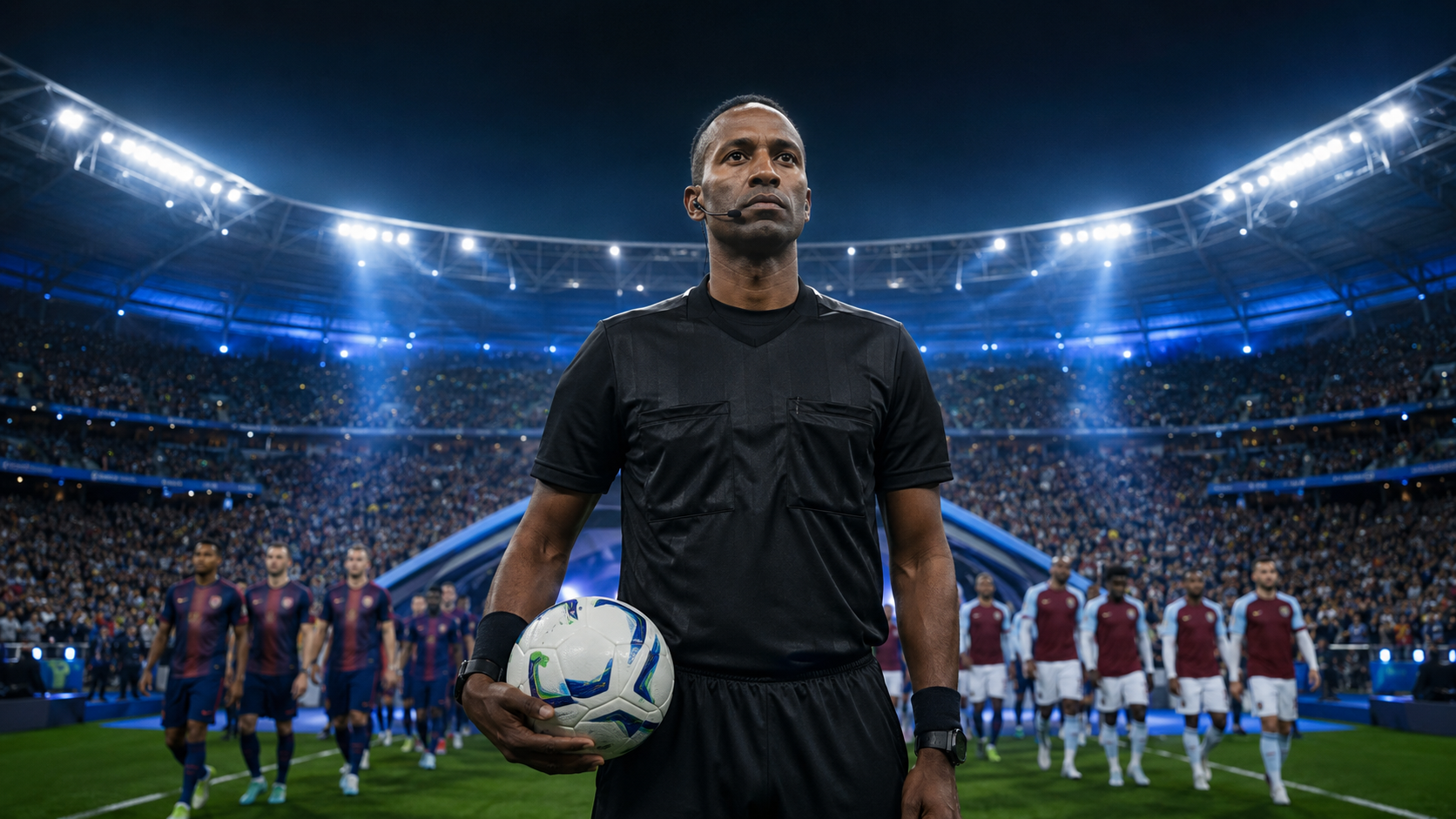
Somali referee Omar Abdulkadir Artan is about to stand at the center of one of European football's most visible stages.
On Wednesday, August 12, 2026, Artan is set to officiate the UEFA Super Cup between Paris Saint-Germain and Aston Villa at Red Bull Arena in Salzburg, Austria. The match is already a major fixture: Champions League winner against Europa League winner, European prestige against European ambition.
But for African and diaspora audiences, the deeper story is the man with the whistle.
Artan's appointment comes after he was denied entry to the United States in June, preventing him from participating in the 2026 FIFA World Cup. According to Associated Press reporting, U.S. authorities cited unsubstantiated security concerns. The Guardian reported that Somalia is among countries affected by a U.S. travel ban, and that FIFA said immigration decisions were outside its control.
Now Artan is preparing to make history as the first non-European referee to take charge of the UEFA Super Cup.
From Exclusion To Recognition
The easiest version of this story is a comeback headline. The better version is about credibility under pressure.
Artan did not become an elite referee because of sympathy. UEFA's own announcement described him as one of the world's top referees, noting that he has been FIFA-listed since 2018 and was named CAF Men's Referee of the Year in 2025.
That matters. This is not simply a symbolic appointment. It is recognition of African officiating quality on a global stage.
The Guardian reported that Artan called the period after his U.S. exclusion difficult, while also expressing gratitude for the support he received. He also spoke about the pride felt by Somali communities in Europe and Austria as he prepared for the Salzburg match.
For a professional who had trained for the World Cup, being turned away at the border could have become the defining public moment. Instead, the next chapter places him in the center circle of a European final.
An African Officiating Team On A European Stage
Artan will not be alone.
The Guardian reported that his assistant referees include Liban Abdoulrazack Ahmed of Djibouti and Stephen Eleazar Onyango Yiembe of Kenya. That gives the assignment a wider African football significance: Somalia, Djibouti, and Kenya represented in the officiating team for one of UEFA's showcase matches.
For years, African football stories have too often been framed through talent exports alone: players leaving, clubs scouting, leagues being overlooked. Artan's moment widens the frame. African excellence is not only on the pitch. It is also in refereeing, administration, analysis, coaching, and the systems that make elite sport possible.
Why Diaspora Readers Should Care
This is a diaspora dignity story because it sits at the intersection of mobility, suspicion, merit, and recognition.
Many Africans and people of African descent understand what it means to carry credentials into spaces where gatekeepers still see risk before they see talent. Artan's case is specific, and ADUNAGOW should avoid claiming motives beyond sourced reporting. But the pattern is familiar: African professionals often have to prove excellence twice, then explain themselves again at the border.
That is why the UEFA Super Cup assignment travels beyond football. It asks a bigger question: who gets trusted to belong on global stages?
Artan's answer is professional discipline. Prepare. Officiate. Lead the match. Let the work speak in front of the world.
The ADUNAGOW Take
The strongest lesson here is not revenge. It is recognition.
Omar Artan's Super Cup appointment shows that African achievement can survive institutional setback. It also shows why global sport needs fairer mobility protections for athletes, officials, staff, journalists, and fans whose work depends on crossing borders.
Football loves to call itself global. Stories like this test whether the global game protects all of its professionals equally.
On August 12, Artan will step into the match with PSG, Aston Villa, UEFA, CAF, Somalia, and the diaspora watching. For African football, the signal is clear: the center circle belongs to us too.
Read Next
- Kenya Wants The World Athletics Stage Africa Has Already Earned
- Cameroon’s Women Just Made History. Now The Investment Must Match The Glory
- Africa Is Bigger Than the Map: Why the AU’s New Push Matters
Discover more from ADUNAGOW Magazine
Subscribe to get the latest posts sent to your email.


One thought on “Somali Referee Omar Artan Turns World Cup Exclusion Into UEFA Super Cup History”
Comments are closed.