DR Congo's Ebola Crisis Passes 2,000 Deaths. The World Cannot Look Away.
The Democratic Republic of Congo's Ebola outbreak has crossed a grim threshold: more than 2,000 people have died, according to government data reported by the Associated Press on August 11, 2026.
The latest figures put the outbreak at 4,381 confirmed cases and 2,011 deaths. That makes the crisis not just another health emergency in a familiar region, but one of the most serious Ebola moments Africa has faced since the West Africa epidemic of 2014 to 2016.
For ADUNAGOW readers, especially in the African diaspora, the story deserves more than distant sympathy. It is a test of global health attention, African public-health resilience, and whether the world still waits too long before treating African emergencies as shared emergencies.
A Fast-Moving Crisis In A Hard-To-Reach Region
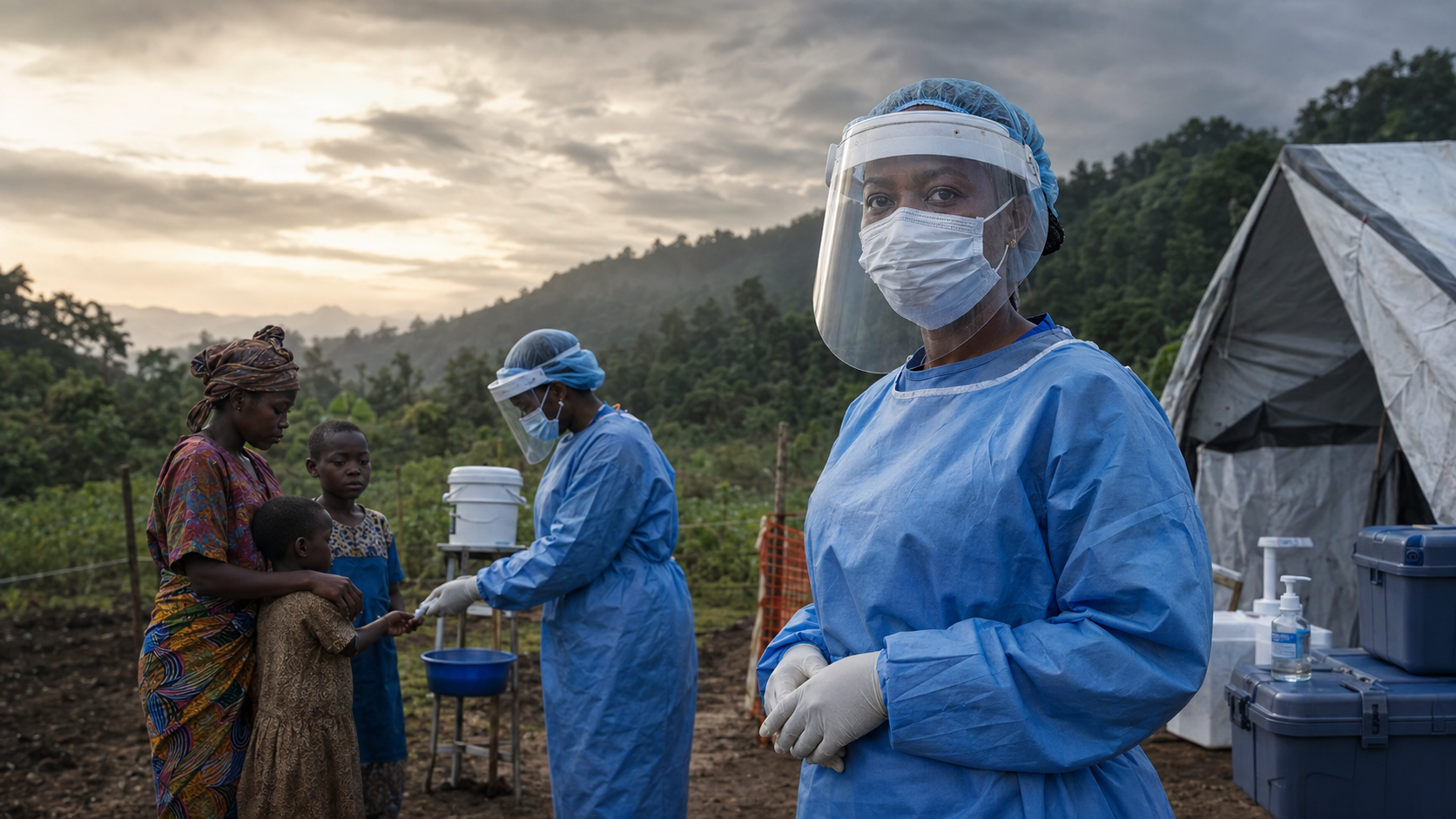
The outbreak is centered in eastern Congo, where health responders already work against conflict, weak transport routes, displacement, and strained public systems. WHO has described the emergency as the largest Ebola outbreak ever recorded in DRC.
This outbreak is also caused by the Bundibugyo virus strain, which makes the response more complicated. Unlike some previous Ebola responses, the available vaccine and treatment playbook is more limited, raising the importance of surveillance, isolation, care, community trust, and rapid support to frontline teams.
ECDC reported that, by data through August 7, DRC had already recorded 4,209 confirmed cases and 1,916 deaths, with new cases reported in Ituri, North Kivu, and Haut-Uele. The AP figures published on August 11 show how quickly the toll has continued to move.
The Numbers Are Human
Public-health stories can become numbingly statistical: cases, deaths, zones, alerts. But behind each figure is a household, a clinic, a market route, a school, or a village trying to understand how to keep moving while fear spreads faster than official messaging.
Health workers are also carrying an impossible load. Reports point to access problems caused by insecurity, poor roads, and work stoppages linked to payment issues. That matters because Ebola response depends on speed: finding cases early, tracing contacts, safely caring for patients, and earning enough local trust for people to report symptoms instead of hiding them.
When response teams are delayed, the virus gains time.
Why The Diaspora Should Pay Attention
The African diaspora often becomes visible to the world through remittances, culture, sports, and entrepreneurship. But diaspora power also matters in moments like this: amplifying trusted information, supporting credible responders, pushing institutions to fund the response, and resisting the lazy narrative that turns African suffering into background noise.
This is not a call for panic. It is a call for attention with discipline.
Diaspora communities can share verified updates from WHO, Africa CDC, DRC health authorities, and trusted humanitarian organizations. They can support organizations with direct response capacity. They can also keep the story in public conversation long enough for institutions to act with urgency.
The Bigger Lesson
Ebola outbreaks are never only biological events. They expose the condition of roads, clinics, trust, labor systems, research investment, and international coordination. They reveal whether public-health infrastructure has been treated as a luxury or as national security.
DR Congo has faced Ebola before. Congolese doctors, nurses, lab workers, burial teams, community leaders, and public-health officials have experience that the world should respect. But experience is not enough when the scale grows faster than resources.
The question now is not whether Congo can endure another crisis. Congolese communities have endured too many. The question is whether Africa and its global partners can respond with the seriousness, funding, and speed that this moment demands.
What To Watch Next
The next signs to follow are clear: whether new cases begin to slow, whether contact tracing improves, whether health workers receive the support they need, whether insecurity continues to block access, and whether international funding expands quickly enough.
For the diaspora, this is a moment to stay informed without spreading fear, to share credible sources, and to insist that African public-health emergencies receive the same urgency the world gives crises elsewhere.
The death toll has passed 2,000. The response cannot remain behind the curve.
Read Next
- When Africans Must Be Evacuated From Africa, Unity Faces A Hard Test
- Africa Is Bigger Than the Map: Why the AU’s New Push Matters
- West Africa’s Development Bank Just Got a Credibility Upgrade. Here’s Why It Matters.
Discover more from ADUNAGOW Magazine
Subscribe to get the latest posts sent to your email.