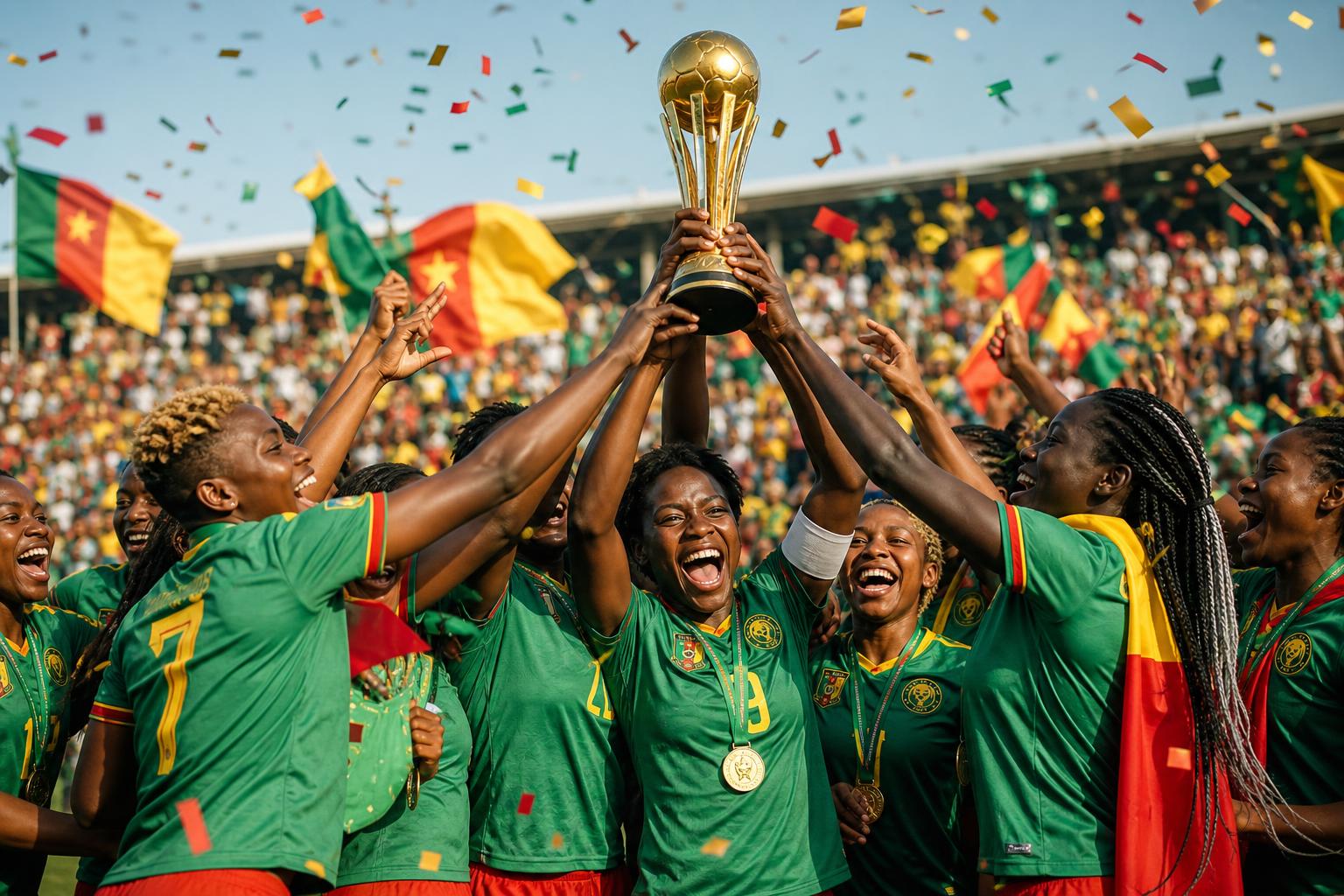
Cameroon's Women Just Made History. Now The Investment Must Match The Glory
Cameroon's first Women's Africa Cup of Nations title is more than a football result. It is a public reminder that African women's sport is already producing continental pride, diaspora energy, and soft power worth building around.
Cameroon's women did not only win a final. They changed the room.
After beating Malawi 3-0 in Morocco to claim the country's first Women's Africa Cup of Nations title, the team returned home to a celebration that felt bigger than football. Supporters in national colors greeted a squad that had delivered something rare and powerful: a clean national pride moment at a time when African headlines too often arrive wrapped in crisis.
That is why this victory matters for ADUNAGOW readers. It is a sports story, yes. But it is also a development story, a visibility story, and a diaspora story.
For Cameroonians at home, the title is a moment of shared joy. For Cameroonians abroad, it is a flag-carrying moment that can travel through family groups, community pages, youth clubs, and diaspora watch parties. For African girls watching from any country, it is another answer to an old question: who gets to become the face of national excellence?
The answer, increasingly, is women.
African women's football has been building toward moments like this for years. The talent has never been the missing piece. The harder questions have been around investment, infrastructure, visibility, pay, medical support, youth pathways, media coverage, and serious sponsorship. Too often, women's teams are celebrated after they win, but treated like an afterthought before they do.
Cameroon's title should disrupt that pattern.
The right lesson is not simply that the Lionesses made the country proud. The deeper lesson is that women's sport can be a national asset when institutions give it oxygen. Trophies create emotion, but systems create continuity. If Cameroon wants this title to become the beginning of an era rather than a beautiful exception, the follow-through matters: better domestic competition, stronger girls' academies, professionalized support staff, visible broadcast packages, and sponsors willing to enter before the next trophy is already in hand.
The diaspora has a role here too.
Across Europe, North America, the Gulf, and other African countries, Cameroonian communities already know how to mobilize around football. That same energy can support girls' tournaments, scholarship drives, club partnerships, player storytelling, and media attention that keeps the athletes visible after the parade ends. Diaspora pride is powerful, but diaspora structure is even more powerful.
This is also a soft-power moment for Africa. Women's football is becoming one of the continent's strongest public stages: emotional, global, youth-facing, and culturally resonant. Every breakthrough adds to a bigger argument that African sport is not only entertainment. It is identity, diplomacy, business, tourism, media, and inspiration moving at once.
Cameroon now has a chance to turn celebration into architecture.
The players have already done their part. They won the match. They lifted the trophy. They gave the country a moment. The question now belongs to federations, sponsors, broadcasters, schools, clubs, and diaspora communities: will they treat this victory like a miracle, or like proof of what deserves real investment?
Because history is beautiful.
But history that builds the next generation is even better.
Read Next
- Kenya Wants The World Athletics Stage Africa Has Already Earned
- Somali Referee Omar Artan Turns World Cup Exclusion Into UEFA Super Cup History
- Africa Is Bigger Than the Map: Why the AU’s New Push Matters
Discover more from ADUNAGOW Magazine
Subscribe to get the latest posts sent to your email.