AJ Dybantsa Goes No. 1: A Diaspora Basketball Moment Bigger Than Draft Night
The Washington Wizards made AJ Dybantsa the first pick of the 2026 NBA Draft. For African and Caribbean diaspora audiences, the moment also carried a deeper story about family roots, global talent, and the changing face of basketball excellence.
AJ Dybantsa's name was called first, and the basketball world immediately started talking about the Washington Wizards' future.
But for many African and Caribbean diaspora readers, the moment carried another layer. Dybantsa, selected No. 1 overall in the 2026 NBA Draft, is not only a franchise-building prospect. He is also part of a wider story about how African-descended families, migrant ambition, and global cultural identity are shaping the next generation of elite sports.
The Associated Press reported that the Washington Wizards selected Dybantsa with the first pick in the first round of the NBA Draft on Tuesday, June 23, 2026, in New York. NBA.com also confirmed Dybantsa went No. 1 and noted that the first round became a freshman-heavy night, with eight freshmen selected in the first nine picks, tying an all-time record.
That context matters. Dybantsa did not enter the league quietly. He arrived as the headline name of a draft class defined by youth, speed, and high expectations.
For ADUNAGOW readers, the deeper question is what this kind of visibility represents. Reports on Dybantsa's family background have identified his father, Ace, as from the Republic of Congo and his mother, Chelsea, as from Jamaica. That makes his draft-night rise part of a familiar but powerful diaspora pattern: African and Caribbean families building lives across borders, raising children inside multiple cultural worlds, and watching those children step onto global stages.
Sports often tells this story faster than politics can. A draft pick becomes a family story. A jersey becomes a symbol. A player walking across a stage in New York becomes a reminder that diaspora identity is not abstract. It lives in names, parents, accents, sacrifices, food, discipline, pressure, pride, and public achievement.
Dybantsa's selection also fits a larger shift in basketball. The sport is no longer defined by a single pipeline. Talent is being shaped by American schools, African family networks, Caribbean identity, global academies, international scouting, and digital attention. The NBA has become one of the clearest mirrors of that shift.
For African audiences, that matters because representation in global sports is no longer limited to athletes born on the continent. The diaspora is also carrying African stories into arenas, broadcasts, draft rooms, and endorsement markets. Some players will represent African national teams. Others will represent African heritage more informally through family, culture, and public identity. Both forms of visibility shape how young people imagine what is possible.
That is why Dybantsa's No. 1 selection should not be reduced to a transaction. The Wizards made a basketball decision. The diaspora saw a cultural signal.
The opportunity now is for media to tell these stories with more care. It is easy to flatten diaspora athletes into slogans. It is harder, and more useful, to explain the systems around them: family migration, parental sacrifice, youth development, school choices, discipline, access, and the global business of talent.
Dybantsa's story is still beginning. He has not played an NBA game yet. Expectations will be heavy. Washington will want production, leadership, and proof that the No. 1 pick can become a foundation. Fans will debate his ceiling, his fit, his pressure, and his readiness.
But before the box scores arrive, the symbolism is already here.
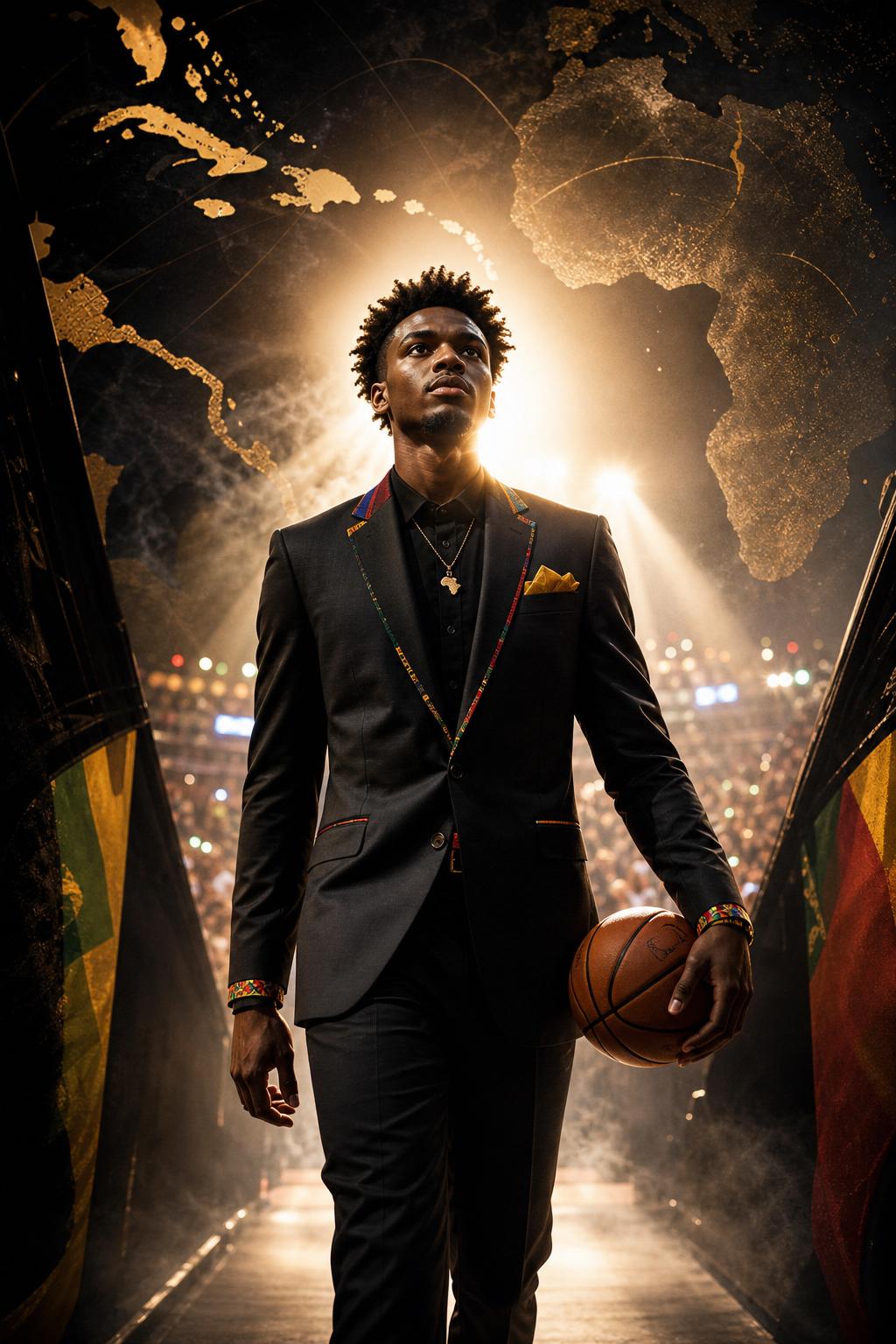
An American teenager with reported Congolese and Jamaican roots just became the first name called in the NBA Draft. For a generation of young people growing up between cultures, that image matters. It says the global African story is not only being told in parliaments, summits, music charts, or migration statistics. It is also being told under arena lights, in draft-night suits, and through families who carry more than one homeland in one household.
The Wizards drafted a player. The diaspora gained a moment.
Discover more from ADUNAGOW Magazine
Subscribe to get the latest posts sent to your email.