
Nigeria's virtual-assets push is bigger than crypto hype. It asks whether diaspora money can move from emergency support into trusted long-term capital.
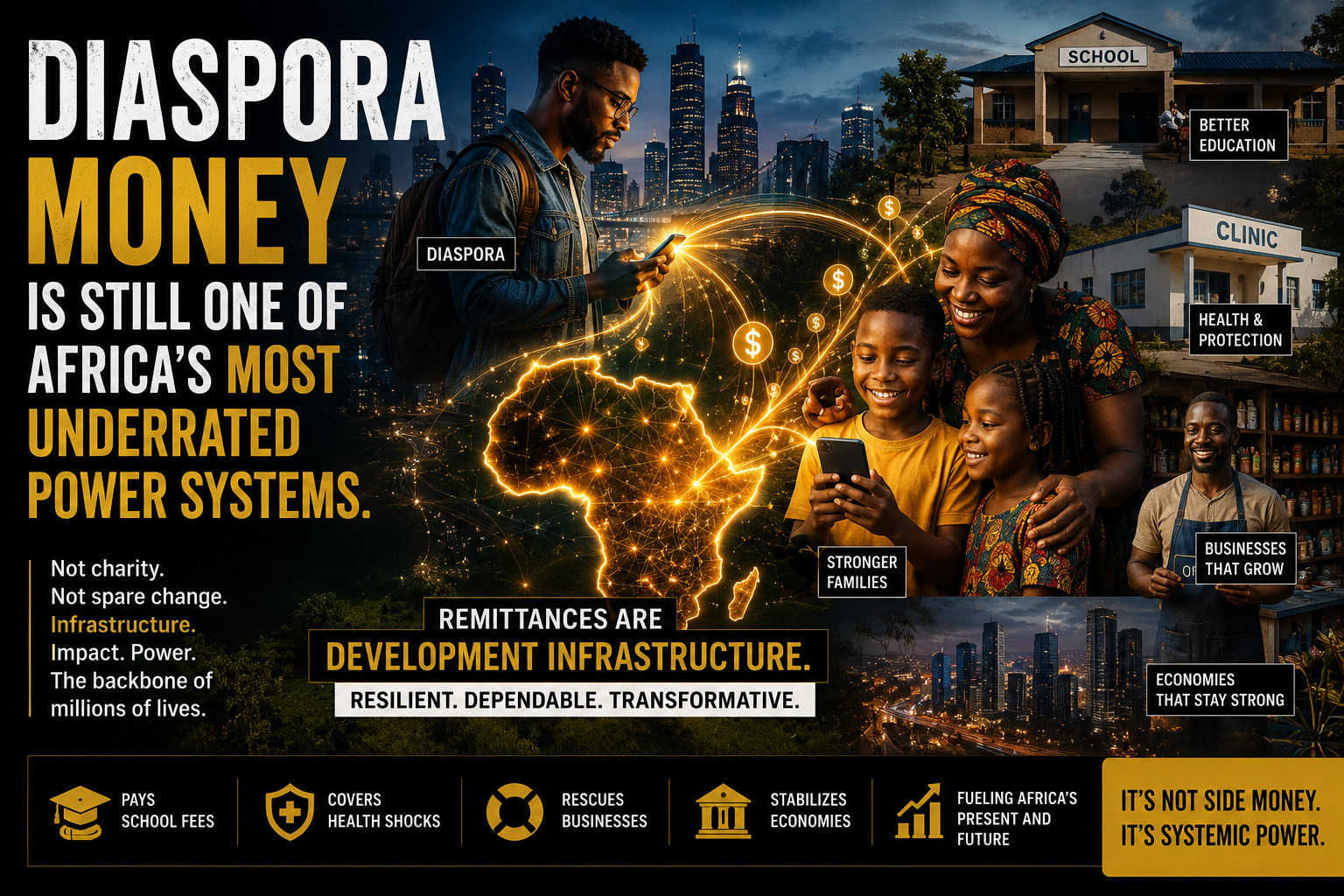
For years, African diaspora money has carried an emotional job. It pays school fees, covers hospital bills, fills gaps in family budgets, and moves quietly through the pressure points of daily life. Nigeria's latest virtual-assets push asks a bigger question: can some of that money also become patient capital?
That is the real story behind Nigeria's move toward a more coordinated virtual-assets framework. The headline may sound like another crypto-regulation update, but the deeper issue is trust. Nigeria is trying to bring digital assets, cross-border payments, tax oversight, capital-market rules, and consumer protection into a clearer system. If that works, it could affect one of Africa's most important financial relationships: the money sent home by Africans abroad.
Current coverage of Nigeria's new Virtual Asset Council frames the shift around a major opportunity: Africa's diaspora remittance flows, often estimated around $100 billion, could do more than support families month to month. With better rails, better rules, and stronger confidence, some of those flows could become investment in businesses, housing, savings products, infrastructure funds, and other vehicles that keep value circulating.
That promise is powerful, but it is not automatic. Diaspora communities already know the risks. Digital-finance platforms can make transfers faster and cheaper, but weak regulation can also invite scams, opaque fees, volatility, and failed promises. The difference between a useful financial revolution and another hype cycle will be whether ordinary people can understand the products, verify the institutions, and recover when something goes wrong.
Nigeria matters because of scale. It has one of the world's largest African diaspora populations and one of the continent's most active digital-finance markets. When Nigerians abroad send money home, they are not just supporting households; they are supplying foreign exchange, stabilizing families, and helping local economies breathe. A trusted investment pathway would not replace remittances for survival needs. It would create an additional lane for families and communities with capacity to build assets.
The policy challenge is delicate. Too much regulatory confusion pushes innovation into the shadows. Too little oversight leaves consumers exposed. The useful middle ground is a system where legitimate companies can build, banks and capital-market institutions know their roles, tax rules are clear, and diaspora users are not treated as experiments.
For ADUNAGOW readers, the story is not whether crypto is good or bad. The story is whether African financial systems can earn the trust of the people who already finance Africa from abroad. Diaspora money has always been development money in practice. Nigeria's virtual-assets shift tests whether it can become development capital by design.
Read Next
- South Sudan’s Next Business Story Is Being Built Through Mobile Money
- West Africa’s Development Bank Just Got a Credibility Upgrade. Here’s Why It Matters.
- Chinese EV Makers Are Moving Into Africa. Who Gets the Real Value?
Discover more from ADUNAGOW Magazine
Subscribe to get the latest posts sent to your email.


One thought on “Nigeria’s Crypto Shift Could Turn Diaspora Remittances Into Investment Capital”
Comments are closed.