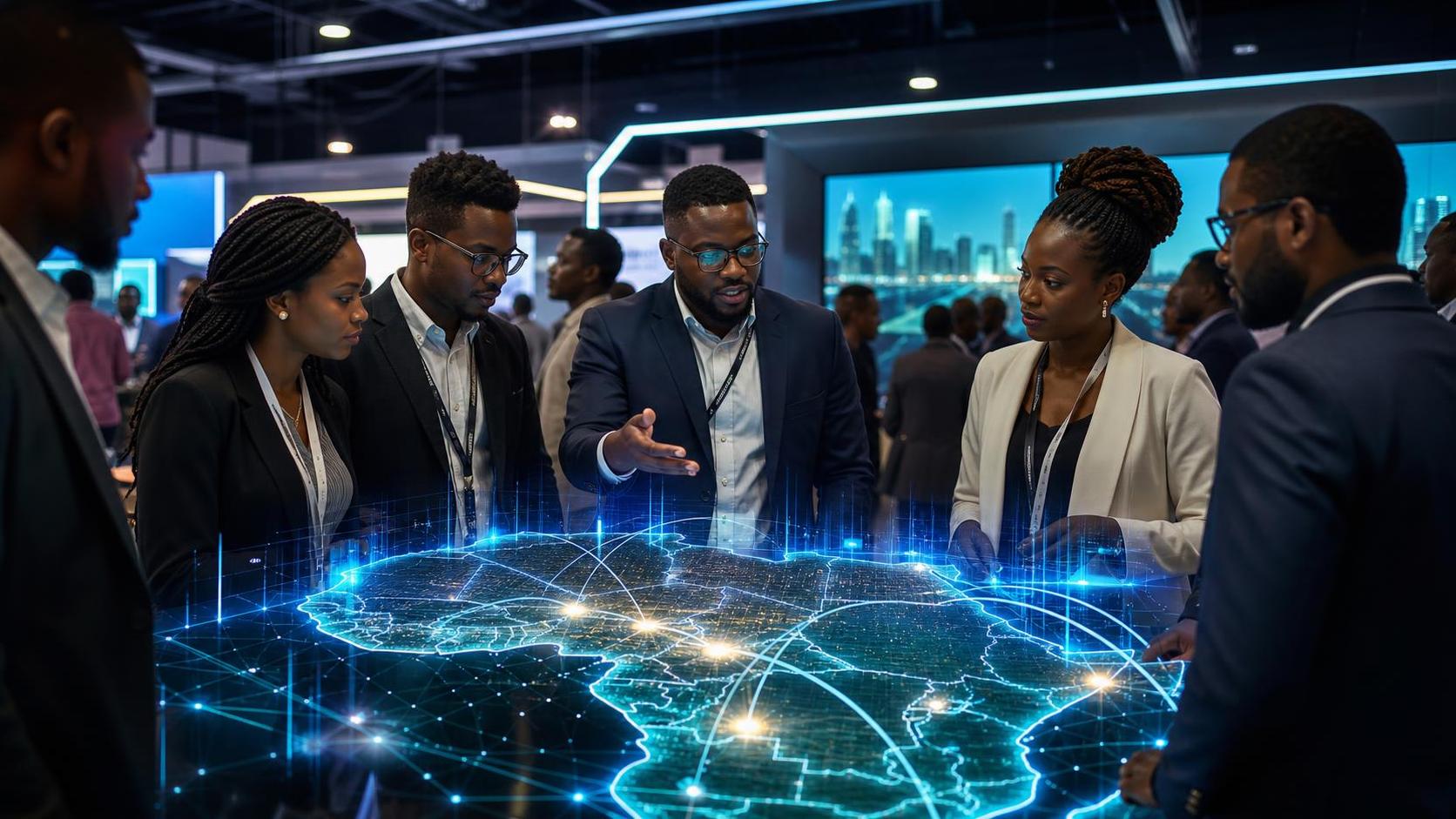
As GITEX Nigeria brings startups, investors, banks and public agencies into Lagos, the deeper story is Africa's fight to become a producer of AI infrastructure, not just a consumer of imported technology.
Lagos is not just hosting another technology conference this week. It is hosting one of the clearest signals yet that Africa's digital future is becoming a contest over ownership, infrastructure and capital.
GITEX Nigeria 2026 runs from Aug. 31 to Sept. 3 across Abuja and Lagos, moving from a Government Leadership and AI Summit in the capital to the Lagos Tech Expo and Startup Festival on Sept. 2 and 3. The event's own framing is ambitious: artificial intelligence, digital public infrastructure, cybersecurity, fintech, startup growth and the systems needed to move West Africa from digital consumption to digital production.
That distinction matters.
For years, Africa's technology story has often been told through someone else's lens: the next big market, the next billion users, the next pool of engineering talent, the next destination for global platforms. GITEX Nigeria is useful because it shows a different possibility. It places African founders, public agencies, banks, investors and global technology companies in the same room and asks a sharper question: who will build the rails that everyone else wants to use?
According to GITEX Nigeria, the platform connects more than 150 federal and state agencies, over 40 banking institutions, 300 investors and more than 1,000 startups across Abuja and Lagos. Its press release says the startup festival is expected to feature more than 750 startups from Nigeria and more than 25 countries, with companies working across AI, fintech, healthcare, education, agriculture, mobility and climate technology. Investor programming is being positioned around access to investors managing more than $200 billion in global capital.
Those numbers are not the story by themselves. The real story is what they reveal about the next phase of African power.
AI is not only a software trend. It is becoming a layer of economic infrastructure. It will affect how governments deliver services, how banks assess risk, how farmers get information, how clinics manage care, how students learn, how small businesses receive payments, and how citizens move through identity systems. If African countries only adopt tools built elsewhere, they may gain convenience while losing leverage. If they help shape the infrastructure, standards, talent base and companies behind those tools, the continent's role changes.
That is why the phrase "sovereign AI" matters. It can sound technical, but the public meaning is simple: African societies need the capacity to build, govern and benefit from the technologies that will increasingly organize public life and economic opportunity.
Nigeria is a natural stage for this argument. It has one of Africa's most visible startup ecosystems, a large youth population, a powerful creative economy, a massive payments market and a diaspora that already understands both the opportunity and the frustration of trying to build across borders. Lagos, in particular, gives the story energy. It is messy, commercial, ambitious and globally connected. It is the kind of city where technology is not an abstraction. It is a survival tool, a business engine and a cultural signal all at once.
For the African diaspora, GITEX Nigeria should be read as more than a trade-show headline. It is a map of where participation may be possible. Diaspora professionals can bring technical mentorship, product experience, policy knowledge, capital, media visibility and international partnership networks. Diaspora investors can look beyond hype cycles and ask which companies are solving real African problems with defensible local insight. Diaspora media can help ensure that African innovation is not only covered when foreign capital validates it.
The risk is that big events become spectacle without follow-through. Booths, panels and badges do not automatically create durable companies, better public services or inclusive digital economies. The test after GITEX Nigeria will be whether conversations turn into procurement, financing, skills pipelines, local infrastructure, startup revenue and policies that protect citizens while enabling innovation.
Still, the timing is important. At a moment when every global power wants influence over AI, data, minerals, connectivity and markets, Africa cannot afford to be only the audience. The continent needs builders, regulators, storytellers, investors and citizens who understand that technology is now part of sovereignty.
Lagos is giving that conversation a stage. What matters next is whether Africa turns the stage into systems.
Sources:
- https://gitexnigeria.ng/
- https://gitexnigeria.ng/gitex-nigeria-2026-startups-ai-and-africas-digital-future-in-focus
Read Next on ADUNAGOW
- Why Ventures Platform’s $84M Fund Matters for Africa’s Startup Future
- The Diaspora Language Comeback: Young Africans Are Reclaiming Mother Tongues Online
- Africa’s Food Future Is Not Waiting for Aid. It Is Waiting for Smarter Capital.
Discover more from ADUNAGOW Magazine
Subscribe to get the latest posts sent to your email.