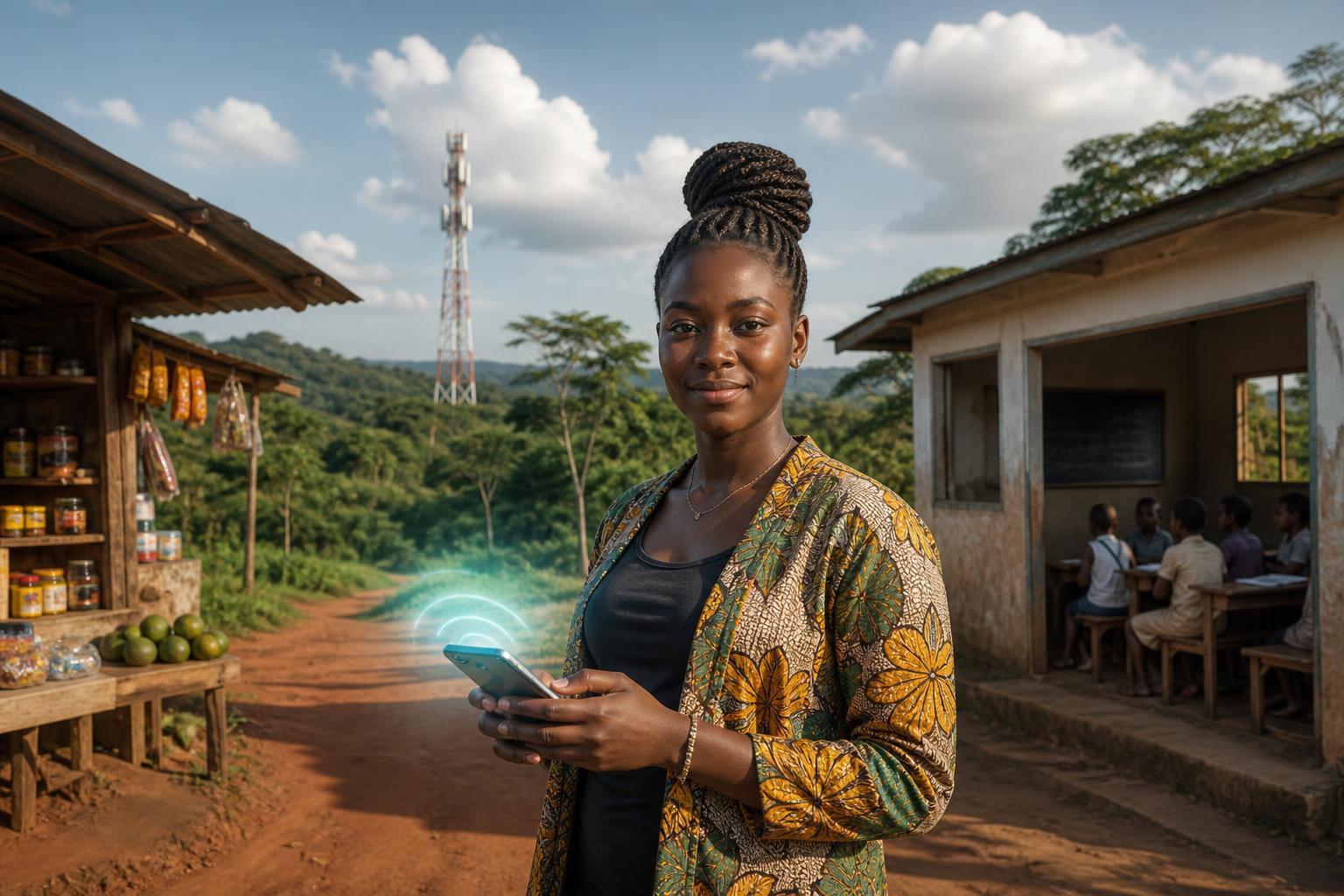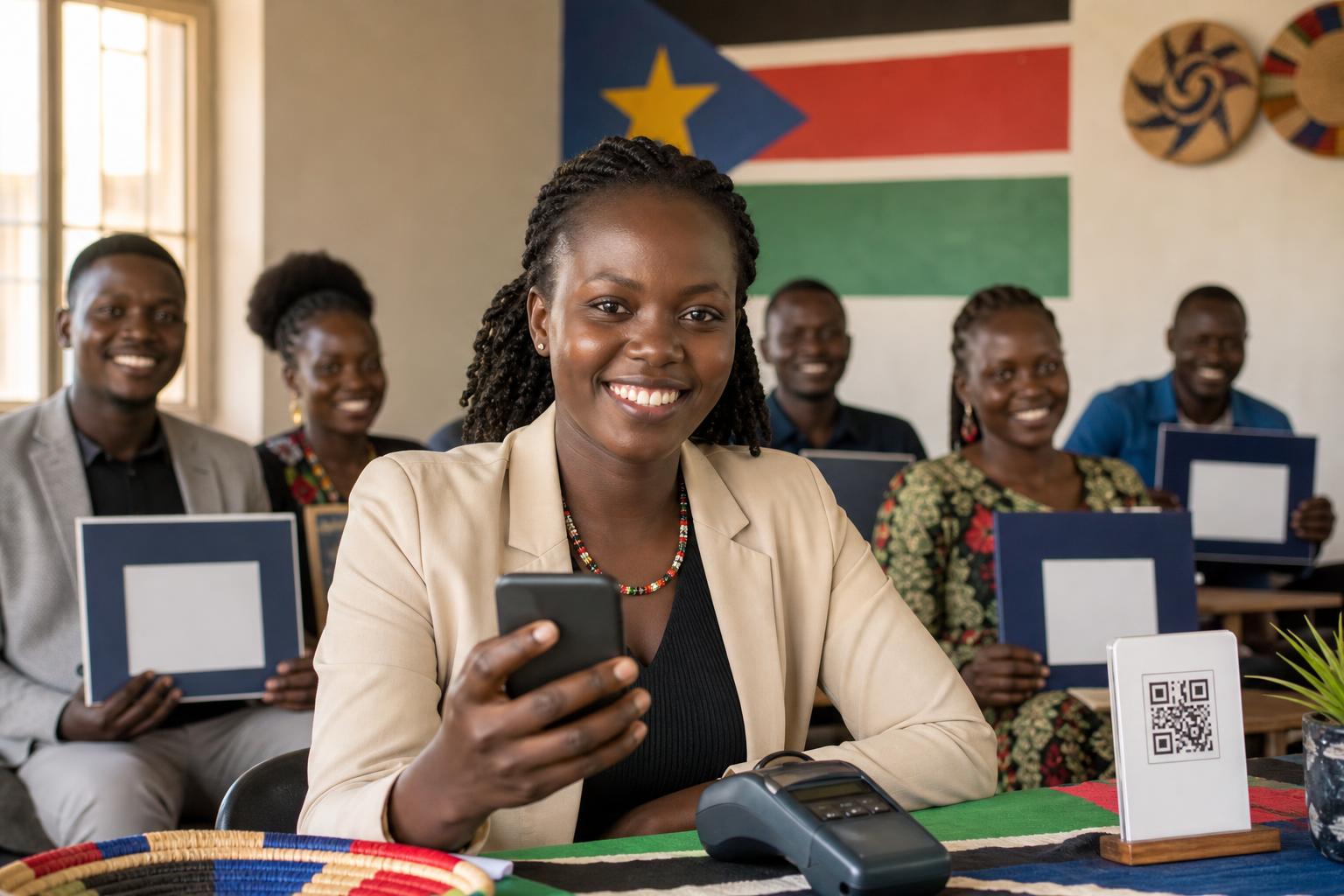
After 1,225 entrepreneurs completed a digital finance program, South Sudan has a quieter story to tell: small businesses are learning how to turn mobile money into resilience, trust, and growth.
South Sudan is usually pushed into the global news cycle through crisis. Conflict, displacement, food insecurity, and political uncertainty often dominate the outside view. But a quieter story is unfolding in the country's small-business economy: entrepreneurs are learning how to make money move more reliably, more visibly, and more productively.
On August 24, 2026, TechAfrica News reported that MTN MoMo, in partnership with Inkomoko, celebrated the graduation of 1,225 entrepreneurs who completed a program focused on digital financial literacy and mobile money integration. Over the past year, participants received business guidance and seed funding from Inkomoko, alongside practical training from MTN MoMo.
That may sound like a small development story. It is bigger than that.
For many entrepreneurs, mobile money is not simply a payment option. It can become a way to manage cash flow, receive customer payments, sell airtime, provide cash-in services, and build a more dependable business record. In economies where formal banking access can be limited, the ability to handle transactions digitally can change the daily rhythm of a small shop, market stall, service provider, or local enterprise.
The program taught participants how to accept digital payments, sell airtime, and provide cash-in services. Those are practical skills, not abstract technology promises. They can help an entrepreneur reduce reliance on cash alone, expand the services offered to customers, and create additional income streams. In a fragile business environment, small operational advantages matter.
This is why the South Sudan story deserves more attention than a quick congratulations post.
Digital finance has become one of Africa's most important development tools because it meets people where they already are. A mobile phone can become a wallet, a payment counter, a savings tool, a customer-service channel, and a business record. The most successful mobile money ecosystems in Africa have shown that financial inclusion does not always begin with a bank branch. Sometimes it begins with a transaction that is fast, trusted, and close enough for ordinary people to use.
South Sudan's entrepreneurs need that kind of practical infrastructure.
The graduation ceremony brought together leaders and representatives from organizations including UNHCR, the National Chamber of Commerce, the Mastercard Foundation, and the Swiss Agency for Development and Cooperation. That mix matters. It signals that entrepreneurship in South Sudan is not only a private-sector concern. It is also tied to recovery, livelihoods, inclusion, and long-term development.
There is also a diaspora lesson here. For South Sudanese abroad, and for the wider African diaspora watching the continent's economic future, small-business systems are often where hope becomes measurable. Remittances can support families, but stronger local enterprise can turn financial support into growth. When entrepreneurs can receive digital payments, manage transactions, and build customer trust, diaspora capital has more practical pathways into the real economy.
This is the difference between sending money into survival and helping money circulate through opportunity.
The story also challenges how South Sudan is framed. A country facing serious difficulties can still produce builders. Entrepreneurs still open shops, serve customers, test ideas, and look for ways to grow. Young people still need skills. Families still need income. Communities still need services. The presence of hardship does not erase the presence of ambition.
That is why programs like this deserve sharper media attention. They show development at the level where many Africans actually experience it: not as a speech, but as a tool in hand, a customer paid, a ledger updated, a service added, and a business still standing tomorrow.
MTN Fintech also received an Award of Recognition for its contribution to entrepreneurship and financial inclusion through the program. The recognition is useful, but the more important measure will be what happens next. Do these entrepreneurs keep using the tools? Do their customers adopt digital payments? Do cash-in services become reliable community access points? Do the businesses grow beyond training-day visibility?
Those are the questions that turn a graduation into a development story.
For ADUNAGOW readers, the larger point is clear: Africa's economic future is not only being built in major infrastructure corridors, government summits, and billion-dollar investment announcements. It is also being built by entrepreneurs learning how to use digital finance to make their daily businesses stronger.
South Sudan's next business story may not begin with a skyscraper, a stock exchange, or a foreign investor headline.
It may begin with 1,225 entrepreneurs learning how to move money better.
Sources:
- https://techafricanews.com/2026/08/24/mtn-momo-equips-1225-entrepreneurs-digital-finance-skills/
- https://techafricanews.com/2026/08/24/mtn-group-h1-2026-revenue-growth/
Read Next
- Nigeria’s Crypto Shift Could Turn Diaspora Remittances Into Investment Capital
- West Africa’s Development Bank Just Got a Credibility Upgrade. Here’s Why It Matters.
- Chinese EV Makers Are Moving Into Africa. Who Gets the Real Value?
Discover more from ADUNAGOW Magazine
Subscribe to get the latest posts sent to your email.