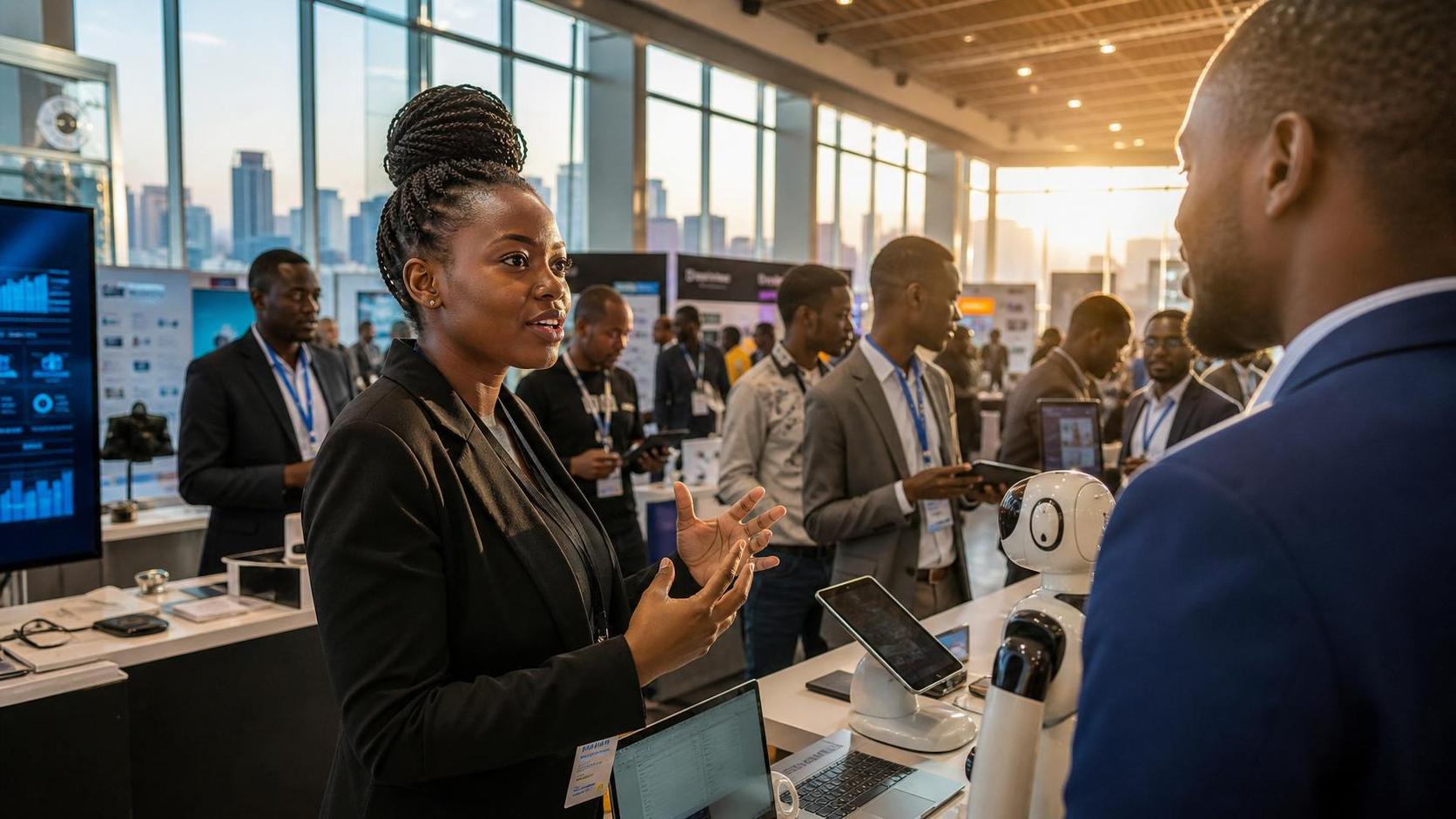
Nairobi Becomes Africa's Tech Deal Room as Africa Technology Show Opens
As Africa Technology Show Kenya opens in Nairobi, the bigger story is not another conference. It is whether Africa's tech ecosystem can turn attention into jobs, capital, infrastructure, and ownership.
Nairobi is about to become one of Africa's most important technology meeting points of the week.
From 22 to 24 July 2026, Africa Technology Show Kenya 2026 is scheduled to bring government leaders, founders, investors, policymakers, manufacturers, corporate executives, startups, and international business delegations to the Kenyatta International Convention Centre. On paper, it is a technology event. In practice, it is a test of something larger: whether Africa's innovation conversation can move from inspiration to execution.
That matters because the continent does not lack talent, ambition, or ideas. What it often lacks is the connective tissue that turns ideas into durable companies, companies into jobs, and jobs into wider economic power. Events like this become important when they do more than fill panels. They become important when they connect the people building Africa's future with the capital, policy support, infrastructure, and market access required to scale.
The show is endorsed by Kenya's Ministry of Information, Communications and the Digital Economy and is being held alongside China Trade Week Kenya, Buildexpo Kenya, and Power & Energy Kenya. That mix is telling. Africa's digital future cannot be separated from trade, power, construction, manufacturing, logistics, and public infrastructure.
Organizers say the three-day program will include more than 150 speakers, over 300 International Trade Council delegates, and more than 1,000 pre-arranged business meetings. Those numbers should be treated as event claims, not guaranteed outcomes. But they point toward the real value of the gathering: Nairobi is being positioned as a deal room for Africa's digital economy.
That is the ADUNAGOW story.
Too much global coverage of African technology still falls into two lazy extremes. One side treats Africa as an endless rescue project waiting for imported solutions. The other side celebrates every startup headline as if a funding announcement alone equals transformation. The truth is more demanding. Africa's technology future will be shaped by who owns the infrastructure, who writes the rules, who builds the companies, who hires the talent, and who captures the value.
Kenya has a strong claim in that conversation. Nairobi is already one of Africa's most visible innovation centers, with a fintech and mobile-money legacy that made the world pay attention. The country's public digital agenda, including youth employment and digital skills initiatives, gives the event an immediate policy frame.
For African diaspora readers, the practical question is simple: where do we plug in?
The diaspora often discusses investment in Africa as an emotional duty. But the stronger frame is strategic participation. Diaspora engineers, product leaders, creators, angel investors, operators, academics, and mentors can help African ecosystems scale when they connect skills to specific companies, sectors, and institutions. That means writing checks when appropriate, but also opening buyer networks, advising founders, recruiting talent, supporting governance, and helping African companies reach global markets without surrendering control.
The timing is also important because Africa's digital transformation debate is becoming more serious. The UN Economic Commission for Africa has been pushing an Africa 2035 Digital Implementation Roadmap to move the continent from fragmented digital initiatives toward coordinated delivery. Separate policy conversations are raising questions about AI infrastructure, data governance, cybersecurity, digital public infrastructure, and whether African countries will shape the systems they depend on or merely consume them.
That is why a Nairobi technology show is not just a Nairobi story.
It sits inside a continental question: can Africa build technology ecosystems that are inclusive, competitive, and sovereign at the same time? Can innovation produce jobs for young people instead of only applause for founders? Can governments support digital growth without smothering it? Can investors bring capital without turning Africa into a testing ground for outside priorities? Can diaspora professionals move from cheering the continent to helping build the systems that make African companies stronger?
The strongest version of this story is not "Africa has another tech event." It is "Africa's next growth chapter needs rooms where builders, policy, capital, and infrastructure meet."
That is what Nairobi represents this week. The panels will end. The photos will circulate. The speeches will be clipped into social posts. The real measure comes afterward: partnerships signed, pilots launched, young people trained, startups funded, cross-border deals opened, and infrastructure strengthened.
Africa does not need technology theater. It needs technology capacity.
If Africa Technology Show Kenya helps move even a portion of its attention into real execution, Nairobi will have done more than host an event. It will have reminded the world that African innovation is not a side conversation. It is one of the places where the future of finance, work, infrastructure, and digital sovereignty will be negotiated.
Read Next
- Amazon Is Bringing Satellite Internet to Rural South Africa. The Bigger Story Is Who Controls Africa's Next Connection Layer
- Airtel Money's IPO Push Shows African Mobile Money Has Become Global Infrastructure
- AfCFTA Has A Local Business Problem. Solving It Could Change African Trade
Discover more from ADUNAGOW Magazine
Subscribe to get the latest posts sent to your email.