M-PESA Ethiopia now lets smart-meter customers buy prepaid electricity through its Super App. The bigger story is not convenience alone. It is the rise of mobile money as everyday infrastructure.
Africa's fintech story is usually told through remittances, startups, bank disruption, and investor rounds. Ethiopia's latest M-PESA update points to something quieter but more powerful: the phone becoming a control panel for everyday life.
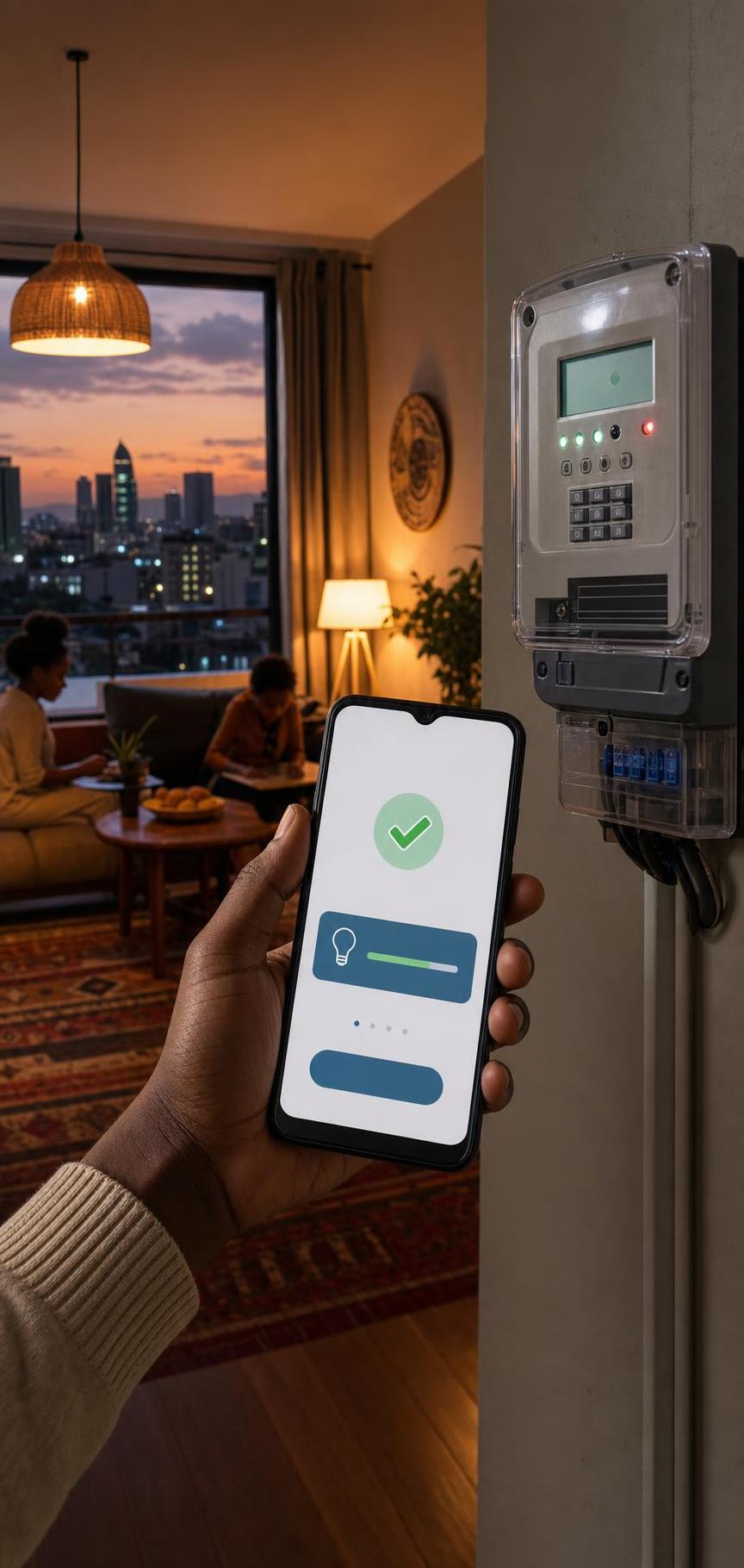
M-PESA Ethiopia has introduced prepaid electricity payments through its Super App, allowing Ethiopian Electric Utility smart-meter customers to buy power directly on mobile. According to TechAfrica News, users can update the app, choose the utility payment option, select Ethiopian Electric Utility prepaid service, enter their contract account number, and receive a 20-digit electricity token for their smart meter.
That may sound like a small product feature. It is not. For a household, it can mean fewer trips to service centers, fewer business-hour bottlenecks, and more control over when electricity is purchased. For a country digitizing public services, it is another sign that mobile money is becoming part of the infrastructure layer, not just the payments layer.
The timing matters. Ethiopian Electric Utility said earlier this year that it was rolling out a USD 48.8 million project to install 500,000 smart prepaid energy meters nationwide. If that rollout expands effectively, digital electricity purchases could become part of a broader shift toward pay-as-you-go utility access, better payment records, and more transparent customer service.
Ethiopia has already been one of Africa's most important tests for telecom competition and digital finance. M-PESA entered a market where Ethio telecom's Telebirr had a head start and where public-service payments are closely tied to national digital strategy. A prepaid electricity feature will not decide that competition by itself. But it does show where the battleground is moving: from "Can people send money?" to "Can one digital wallet solve useful problems in daily life?"
For diaspora readers, this is the development angle worth watching. African fintech is not only about apps that look modern. The real value comes when digital services remove friction from energy, agriculture, health, education, taxes, transport, trade, and small-business operations. A payment button becomes more meaningful when it helps a family keep the lights on, a shop stay open later, or a renter avoid losing time in a queue.
There are still hard questions. The service currently depends on smart-meter access and an updated app. Ethiopia's electricity challenge is not only payment convenience; it includes generation, distribution, reliability, affordability, device access, and customer support. Digital tools can simplify the transaction, but they cannot replace investment in the physical grid.
That is why this story should be read carefully. It is not proof that Ethiopia's energy problems are solved. It is proof that the connection between digital finance and essential services is getting stronger.
Across Africa, the next wave of fintech may not be defined by flashier wallets. It may be defined by the ordinary services people use every week: electricity, school fees, clinic payments, market purchases, transport, and small-business credit. Ethiopia's prepaid electricity rollout is one more signal that African innovation is becoming most valuable when it disappears into daily life.
And for ADUNAGOW's audience, that is the bigger headline: Africa's digital future will be judged not only by who builds the next big platform, but by who makes essential life easier, cheaper, and more reliable for ordinary people.
Read Next
- Nairobi Is Becoming Africa’s Tech Deal Room
- AfCFTA’s Local Business Problem Is Africa’s Real Trade Test
Sources
- TechAfrica News: TechAfrica News report
- M-PESA Safaricom Ethiopia App Store listing: App Store listing
- Ethiopian Electric Utility smart-meter project: EEU project notice
- Telecompaper on 2024 M-PESA and EEU postpaid bill-payment partnership: Telecompaper report
Discover more from ADUNAGOW Magazine
Subscribe to get the latest posts sent to your email.