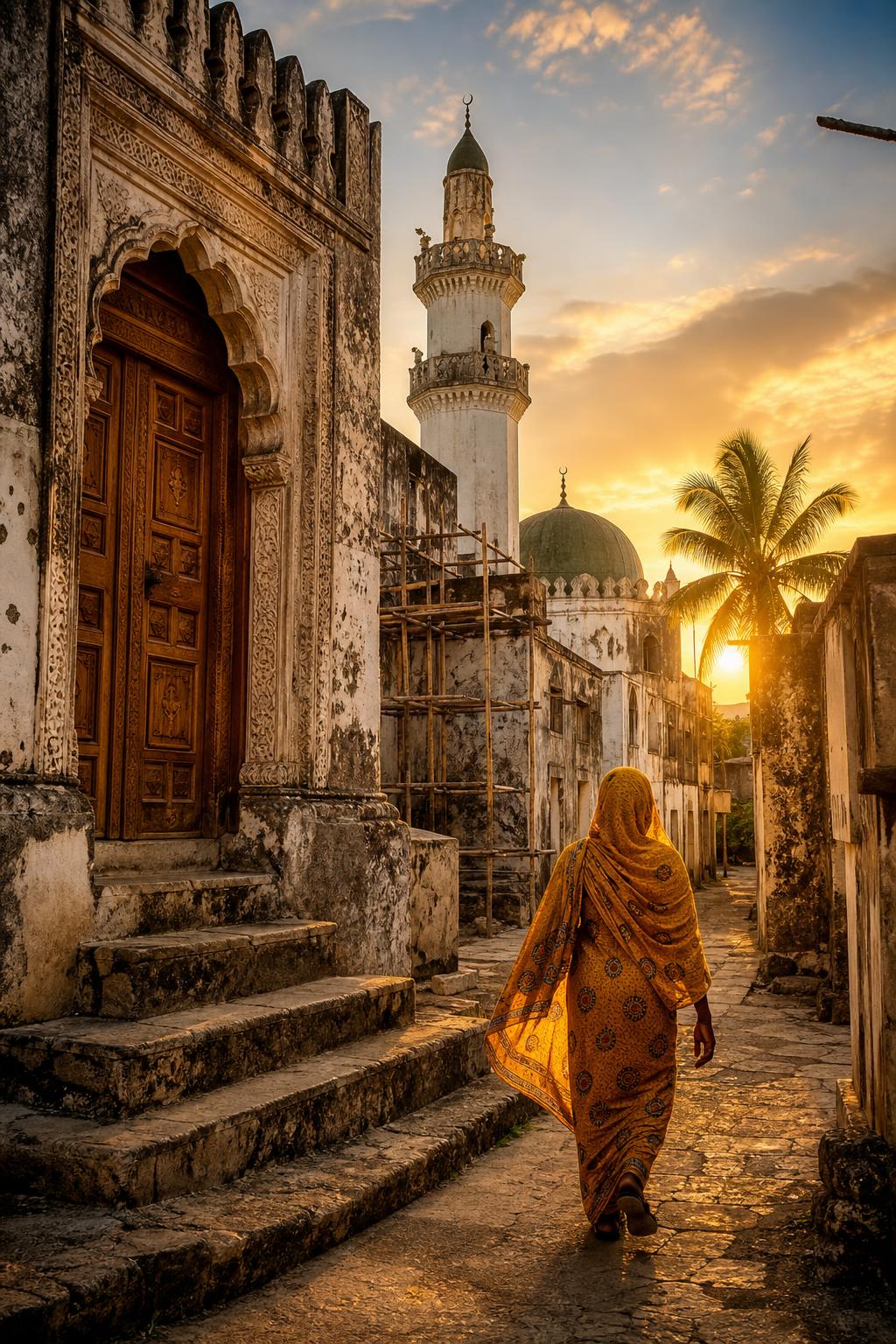
Six historic medinas have pushed Comoros onto the global heritage map. The opportunity is cultural pride, preservation funding, diaspora attention, and a stronger Indian Ocean tourism story.
Comoros has just earned a place on one of the world's most visible cultural maps.
UNESCO has added The Medinas of the Historic Sultanates of the Comoros to the World Heritage List, marking the island nation's first listed World Heritage property. For a country often left out of mainstream African coverage, the recognition is bigger than a ceremonial line in an international register. It is a global acknowledgment that Comoros' history is not marginal. It is urban, maritime, spiritual, commercial, and still alive.
The newly listed property is not a single monument behind a rope. It is a serial site made up of six historic towns. UNESCO says these towns grew from urban nuclei that emerged around at least the 11th century, later developed into city-states around the 14th and 15th centuries, and became principal urban centers of the sultanates established across the Comoros archipelago.
That matters because the story of African heritage is still too often told through a narrow frame: empires on the mainland, colonial capitals, or tourist-ready ruins. Comoros adds another chapter. Its medinas sit in the Indian Ocean world, shaped by migration, trade routes, Islamic traditions, island architecture, matrilineal and matrilocal customs, and the everyday life of communities that still pray, trade, gather, and celebrate there.
This is heritage as a living system, not a frozen postcard.
Africanews reported that some of the medinas date back to the 12th century and include palaces, mosques, public squares, narrow streets, and architectural traces of the archipelago's sultanate era. The same report quoted Comoros culture minister Said Mohamed Ali Said describing the listing as a beginning, not a finish line. That is the right way to read the moment.
World Heritage recognition can open doors, but it does not repair fragile buildings by itself. It can attract attention, tourism interest, technical support, and international preservation partnerships. It can also create pressure on local governments to manage conservation seriously, protect residents from displacement, and make sure cultural value becomes local value.
For Comoros, the opportunity is to turn recognition into stewardship.
The country now has a stronger platform to tell a story that reaches beyond travel brochures. The medinas can become anchors for cultural education, diaspora return trips, heritage tourism, academic research, conservation jobs, and creative storytelling across film, photography, design, and publishing. They can also help reintroduce the wider world to Comoros as more than a small island state between Madagascar and the East African coast.
For the African diaspora, the listing offers a useful reminder: African history did not move in only one direction. It sailed. It traded. It absorbed and transformed influences. It built towns on islands. It developed social systems that carried local identity through centuries of contact with the wider Indian Ocean.
That is why this story deserves attention now. Comoros has been handed a rare visibility moment at a time when African countries are working to claim more ownership over cultural assets, tourism narratives, and the economics of heritage. Recognition from UNESCO can help, but the deeper question is what Comoros does with it.
Will the listing bring resources to fragile structures? Will residents remain central to decisions about conservation? Will young Comorians see careers in heritage management, tourism, architecture, digital documentation, and cultural entrepreneurship? Will the diaspora be invited to participate in preservation rather than only applaud from a distance?
Those are the questions that separate symbolic recognition from real development.
The good news is that the foundation is strong. The medinas are already meaningful because people still use them. Their value comes not only from stone walls and old streets, but from the continuity of community life. Preserving them should mean protecting both the architecture and the living culture that gives the architecture purpose.
Comoros' first World Heritage listing should be celebrated. It places the archipelago inside a global conversation about memory, beauty, and human creativity. But the best outcome would be more practical than prestige: restored heritage, local jobs, better cultural infrastructure, stronger tourism routes, and a new generation of Comorians seeing their own history treated as world history.
The world has noticed the medinas. Now Comoros has a chance to make that attention work for the people who kept them alive.
Read Next
- Ghana's Reparations Summit Turns a Historic UN Vote Into a Global Test
- Cape Verde Held Spain Scoreless. For Africans Everywhere, It Felt Bigger Than Football.
Sources
- UNESCO World Heritage Centre: World Heritage listing
- UNESCO World Heritage Committee 2026: committee page
- Africanews: Africanews report
Discover more from ADUNAGOW Magazine
Subscribe to get the latest posts sent to your email.