As the Women's Africa Cup of Nations opens in Morocco, the story is bigger than fixtures. It is about visibility, investment, national pride, and whether Africa's women's game is finally being treated like a continental force.
Africa's women's football is no longer asking to be treated like a side story.
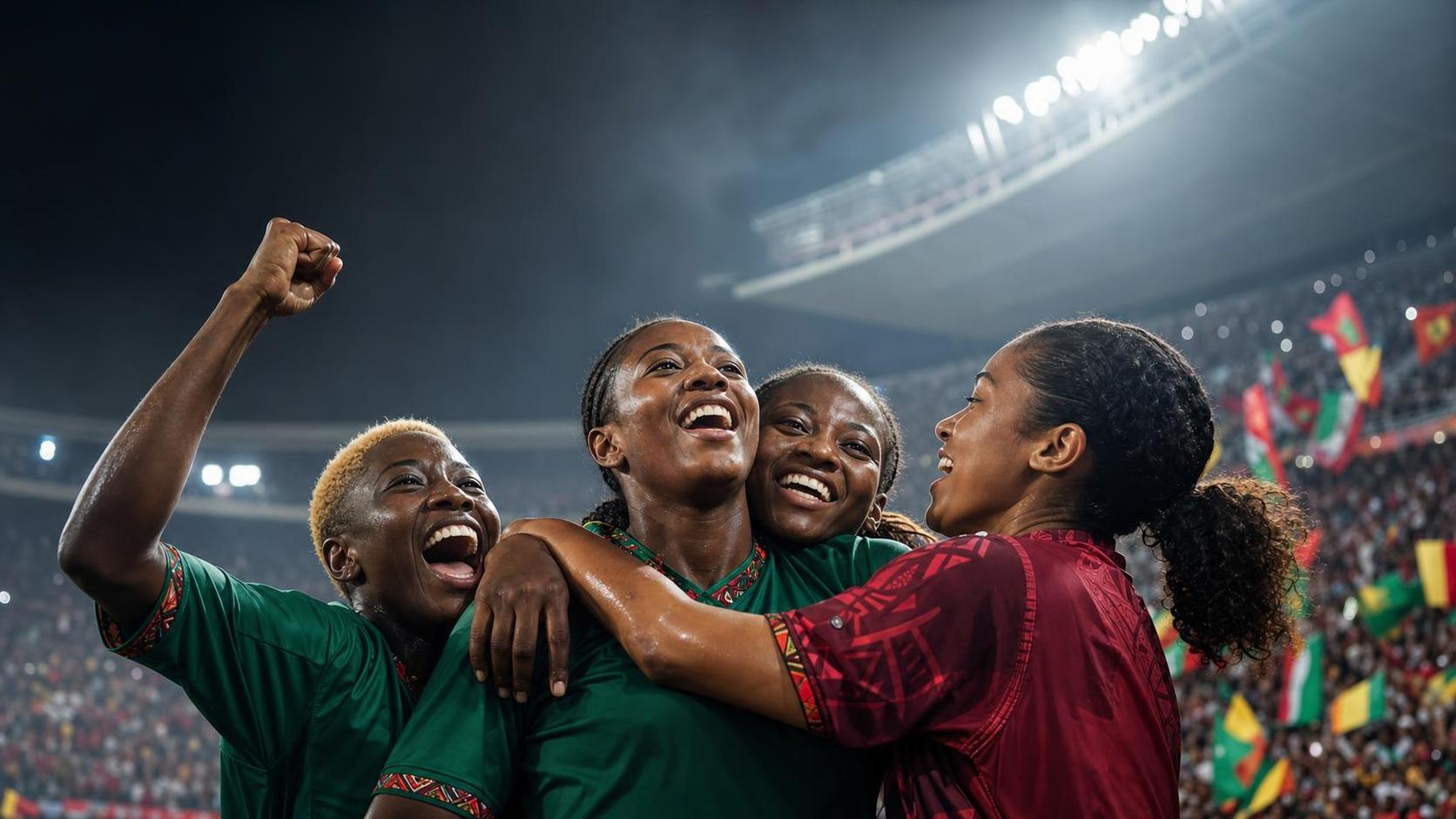
The 2026 Women's Africa Cup of Nations has opened in Morocco, turning the continent's attention toward a tournament that carries more than sporting value. From July 26 to August 16, sixteen national teams are competing across Moroccan cities, with Nigeria defending its crown, Morocco hosting on home soil, South Africa and Zambia chasing another statement, and debutants Malawi and Cape Verde stepping into the continental spotlight for the first time.
That expanded field matters. It gives more countries a stage, more players a platform, and more fans across Africa and the diaspora a reason to watch women's football as a live cultural event rather than a footnote to the men's game.
CAF's schedule opened with Algeria against Senegal in Rabat, followed by Morocco against Kenya. The tournament now moves through group-stage fixtures that can create new heroes quickly: a decisive goal, a fearless goalkeeper, a teenage breakout, a captain carrying a country, or a debutant nation refusing to play like a guest.
For ADUNAGOW readers, the bigger question is not only who wins the trophy. It is whether African women's football is finally receiving the media attention, sponsorship imagination, and development seriousness it deserves.
The diaspora has a role in that question. African communities in London, Paris, Toronto, New York, Atlanta, Brussels, Johannesburg, Dubai, and beyond already know how to turn football into belonging. WAFCON gives those communities another reason to gather around flags, accents, family histories, and the beautiful argument of who Africa should be backing.
This tournament also arrives at a moment when women's football globally is becoming more visible, more commercial, and more culturally powerful. Africa cannot afford to treat its own players as an afterthought while the rest of the world learns how valuable the women's game can be. The opportunity is not only emotional. It is developmental: girls' academies, better coaching, stronger domestic leagues, broadcast investment, tourism, sponsorship, player pathways, and national federations that understand visibility as infrastructure.
Morocco's hosting role adds another layer. The country has spent years positioning itself as a major African football hub, and WAFCON gives it another stage to show whether continental sports infrastructure can serve both spectacle and long-term growth. For countries like Malawi and Cape Verde, the tournament is also a visibility breakthrough. Their presence tells younger players that the map of African women's football is still expanding.
Nigeria, as defending champion, enters with expectation. Morocco carries the pressure and opportunity of home support. South Africa and Zambia bring recent credibility. Ghana, Cameroon, Senegal, Kenya, Algeria, and others bring the national pride that makes African tournaments feel alive before the knockout rounds even begin.
But the strongest story may be the one beyond the scoreboard: African women are carrying a continental football moment that deserves real attention now, not polite applause later.
If WAFCON 2026 is covered properly, it can do more than crown a champion. It can introduce new stars, pull diaspora audiences into African sports media, and remind the continent that investment follows attention only when attention is sustained.
The tournament has started. The bigger test is whether we watch like it matters.
Read Next
- Nairobi Becomes Africa's Tech Deal Room as Africa Technology Show Opens
- AfCFTA Has A Local Business Problem. Solving It Could Change African Trade
Discover more from ADUNAGOW Magazine
Subscribe to get the latest posts sent to your email.