Côte d'Ivoire's Rural Internet Push Is About More Than Signal
A $68 million plan to connect 575 rural localities shows why Africa's digital future cannot stop at capital cities.
Côte d'Ivoire is working to connect 575 rural localities through a national rural connectivity programme valued at about $68 million. On paper, that sounds like a telecom infrastructure update. In practice, it is a bigger question: who gets to participate in Africa's digital future?
For years, the continent's digital story has often been told through capital cities, startup funding rounds, fintech apps, AI labs, and young founders in urban hubs. Those stories matter. But they are incomplete if the village remains offline, if the clinic cannot access digital health tools, if students cannot use online learning, and if small producers cannot reach buyers or services beyond their immediate surroundings.
Côte d'Ivoire's programme is aimed at the places where the market alone often moves too slowly. Rural areas are harder and more expensive to connect. Distance, sparse populations, and lower short-term commercial returns make operators cautious. That is exactly why public policy matters. When connectivity is treated as development infrastructure, the target changes from profitable coverage to inclusive access.
The reported plan focuses on deploying radio sites that can expand mobile and internet access in underserved areas. Earlier reporting on the programme said a first phase completed in 2024 built 160 sites in 175 localities, reaching more than 221,000 people. The broader target is 575 rural localities, with officials linking the rollout to online education, telemedicine, economic opportunity, and digital public services.
That list matters because internet access is no longer just about browsing. It shapes whether a student can continue learning after school, whether a farmer can compare market prices, whether a small business can use digital payments, whether a clinic can connect to remote expertise, and whether citizens can access government services without expensive travel.
For diaspora readers, the story is also personal. Connectivity changes the way families stay connected, how community projects are monitored, how money sent home can support productive activity, and how rural enterprises can become visible to wider markets. A village with reliable access is not suddenly wealthy, but it is less isolated from information, customers, education, and accountability.
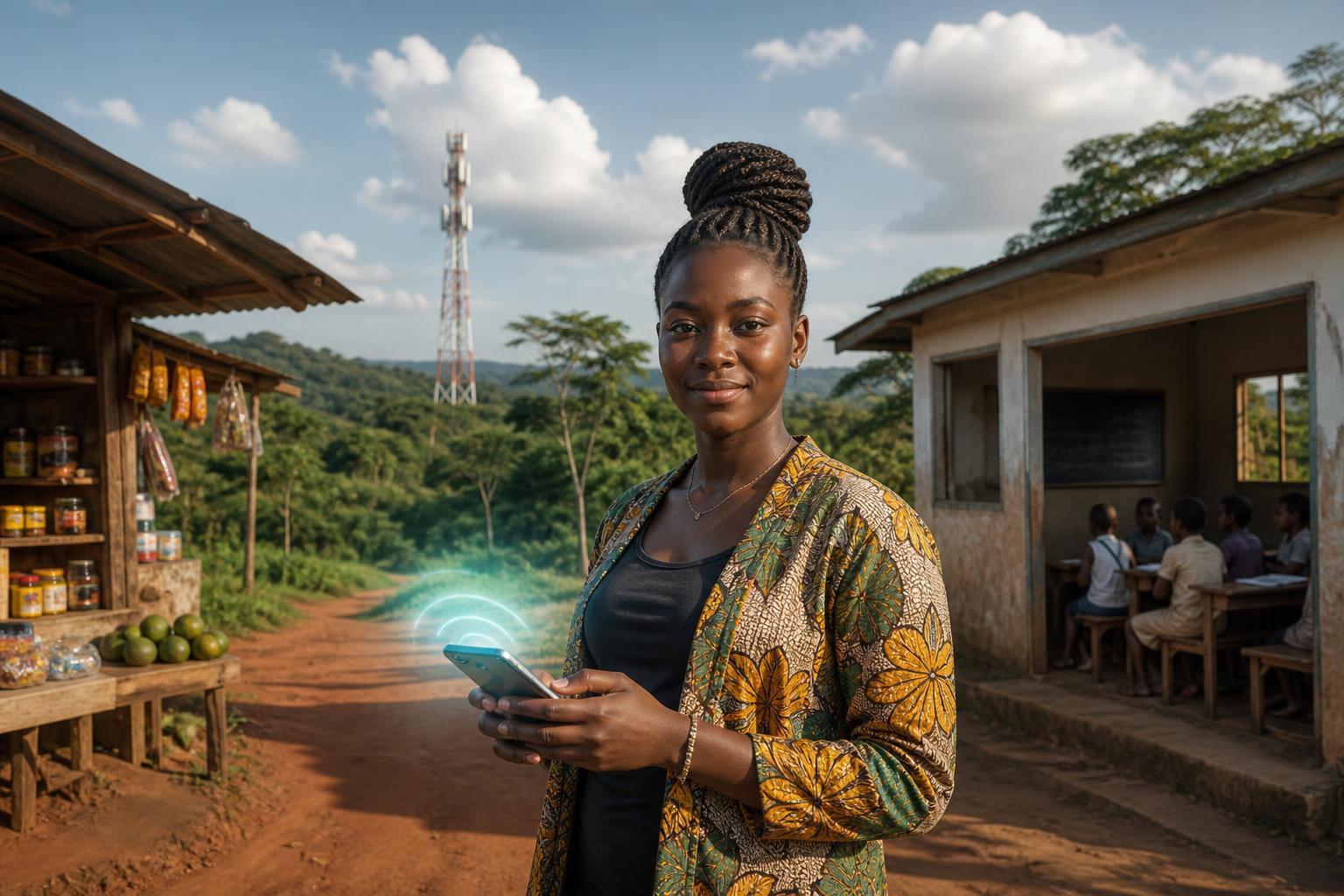
The strongest version of Africa's digital transformation is not just a new app in Abidjan, Lagos, Nairobi, Accra, or Johannesburg. It is a student in a rural classroom able to learn online. It is a woman running a food-processing business able to receive digital payments. It is a health worker able to reach information faster. It is a local producer able to see prices, contact buyers, and document transactions.
Côte d'Ivoire's rural connectivity push should therefore be read as a test. Will digital transformation become another city-first promise, or will it become the kind of infrastructure that reaches people whose lives are shaped by distance?
The answer will not come from announcements alone. It will depend on implementation, affordability, service quality, maintenance, local digital skills, and whether the connected communities can turn access into practical opportunity. Signal bars are only the beginning. The deeper development question is what people can do once the signal arrives.
If Côte d'Ivoire succeeds, the lesson travels beyond one country. Africa's digital economy cannot be measured only by venture funding, AI conferences, or mobile-money transaction volumes. It must also be measured by how many rural communities can finally enter the conversation.
That is where the real future is decided: not only in the boardroom, but in the classroom, the clinic, the market, and the village square.
Read Next on ADUNAGOW
- Africa’s Rangers Are Learning the Tech Stack of Conservation
- Africa’s Newsrooms Are Training for the AI Age
- Africa’s Battery Minerals Are Becoming a Bargaining Table
Sources
- https://techafricanews.com/2026/08/28/cote-divoire-68m-rural-connectivity-programme-targets-575-localities/
- https://telecom.gouv.ci/new/actualite/84
- https://www.wearetech.africa/fr/fils/actualites/tech/cote-d-ivoire-68-millions-pour-connecter-575-localites-rurales
- https://afriqueitnews.com/telecoms/cote-divoire-68-millions-pour-connecter-575-localites-rurales/
- https://africa24tv.com/cote-divoire-68-millions-usd-pour-connecter-575-localites-rurales/
Discover more from ADUNAGOW Magazine
Subscribe to get the latest posts sent to your email.