Kenya's Cotton Comeback Is Really a Fight to Keep African Value at Home
Kenya is growing cotton again, but the bigger test is whether the crop becomes yarn, fabric, garments, jobs, and exports before its value leaves the country.
For years, African development stories have been told from the field: more farmers, better seeds, bigger harvests, higher yields. Kenya's renewed cotton push begins there too, but the more important story starts after the harvest.
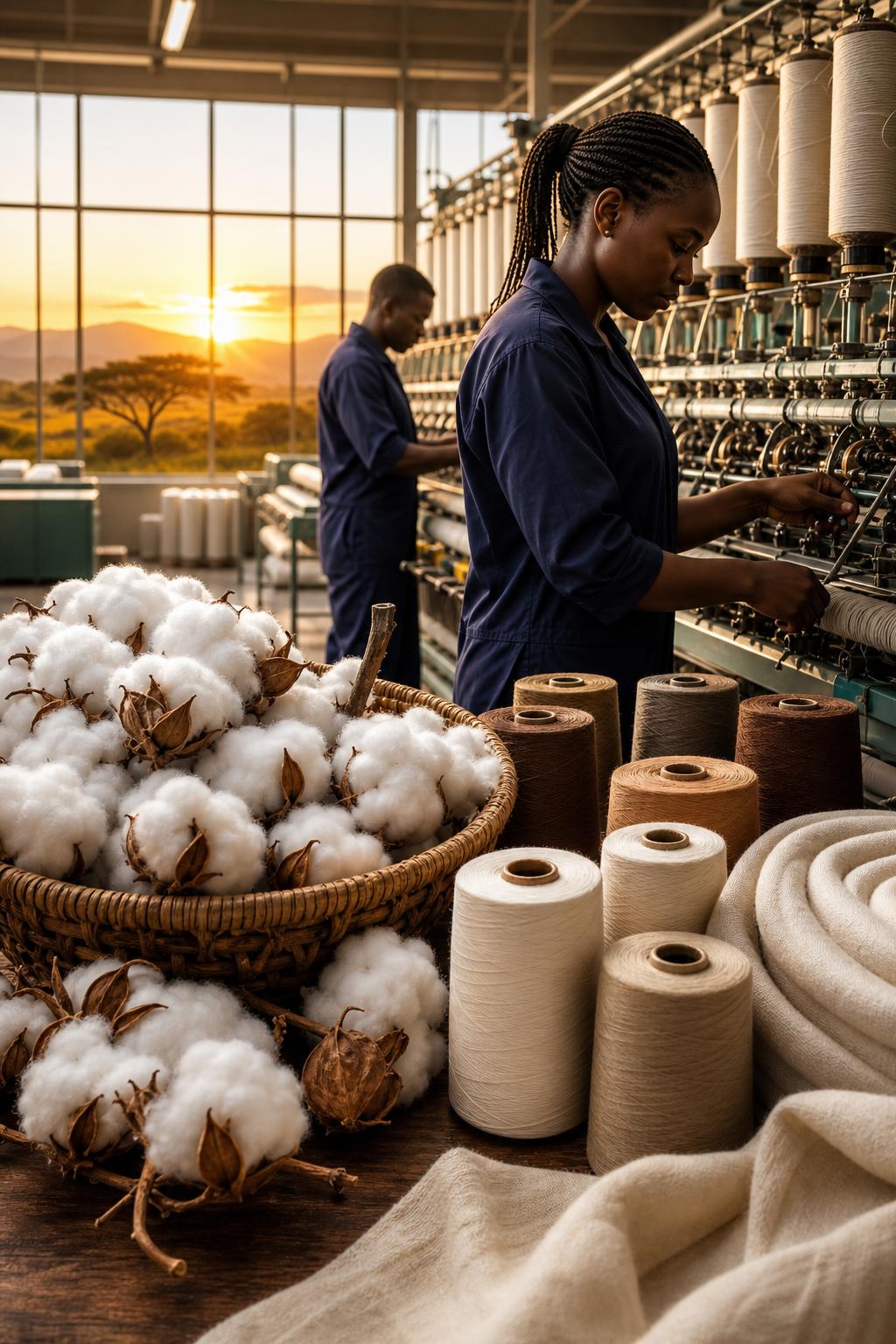
Cotton is not just a crop. It can be a chain of work. Once it leaves the farm, it can move through ginning, spinning, weaving, knitting, dyeing, design, packaging, transport, retail, and export. Each stage either creates jobs inside Kenya or sends value somewhere else.
That is why the latest push around Kenya's cotton revival deserves more attention than a simple farming comeback. According to AllAfrica's reporting from 21 August 2026, Thika Cloth Mills has been working more directly with cotton farmers and cooperatives, especially in Lamu, as Kenya tries to rebuild a stronger cotton-to-textile system. Last season, the company bought slightly more than two million kilogrammes of seed cotton from Lamu, where total production was about 3.5 million kilogrammes.
The numbers matter, but the real issue is the model. If Kenya grows cotton, exports it as raw material, and later imports yarn, fabric, or finished clothing, the country captures only a small part of the possible value. If the cotton is ginned locally, spun locally, woven locally, and turned into garments locally, the same crop supports farmers, machine operators, technicians, designers, mechanics, marketers, retailers, and exporters.
That is the difference between a "Made in Kenya" label and a deeper ambition: made in Kenya, from Kenyan cotton.
Kenya already has apparel manufacturing capacity, especially for export. But much of the yarn and fabric used by manufacturers is still imported. That gap weakens the promise of local manufacturing because the most valuable middle stages of the chain are often missing or underdeveloped.
For ADUNAGOW readers, this is not only a Kenya story. It is a familiar African question: why should countries that produce raw materials capture so little of the finished value?
The same pattern appears across the continent. Cotton leaves and returns as clothing. Cocoa leaves and returns as chocolate. Crude oil leaves and returns as refined fuel. Minerals leave and return inside phones, batteries, cars, and machines. The issue is not talent or raw material. The issue is whether African economies have the financing, infrastructure, policy consistency, industrial skills, and consumer support to hold more of the chain.
Kenya's cotton push shows both the opportunity and the obstacle. Farmers need quality seed, timely inputs, extension support, reliable buyers, and financing that does not collapse before the planting season begins. Processors need predictable volumes and consistent quality. Textile manufacturers need modern machinery, affordable energy, wastewater treatment, quality laboratories, and capital patient enough to support industrial growth.
Then there is competition. Local manufacturers must compete with cheap imports, counterfeits, and second-hand clothing markets that dominate everyday consumption. That does not mean Kenya should close itself off from the world. It means local industry needs enough room to upgrade, compete, and prove that African manufacturing can serve African consumers as well as export markets.
The strongest part of this story is that it is not abstract. A cotton farmer in Lamu is connected to a ginnery. A ginnery is connected to a spinning plant. A spinning plant is connected to fabric. Fabric is connected to designers, garment factories, retailers, and regional trade. Every link kept inside the economy increases the chance that young people find skilled work close to home.
For the African diaspora, the lesson is practical. Development is not only built through remittances or speeches about investment. It is also built through sourcing decisions, retail partnerships, diaspora-backed brands, patient capital, and consumer demand for African-made products with traceable African inputs.
Kenya's cotton comeback should therefore be judged by more than how many kilogrammes farmers harvest. The better measure is how much value remains in Kenya by the time the cotton becomes thread, cloth, clothing, income, and industrial confidence.
Africa has heard enough about raw potential. The next chapter is finished value.
Source: https://allafrica.com/stories/202608210477.html
Read Next
- Chinese EV Makers Are Moving Into Africa. Who Gets the Real Value?
- West Africa’s Development Bank Just Got a Credibility Upgrade. Here’s Why It Matters.
- Africa Is Bigger Than the Map: Why the AU’s New Push Matters
Discover more from ADUNAGOW Magazine
Subscribe to get the latest posts sent to your email.


One thought on “Kenya’s Cotton Comeback Is Really a Fight to Keep African Value at Home”
Comments are closed.