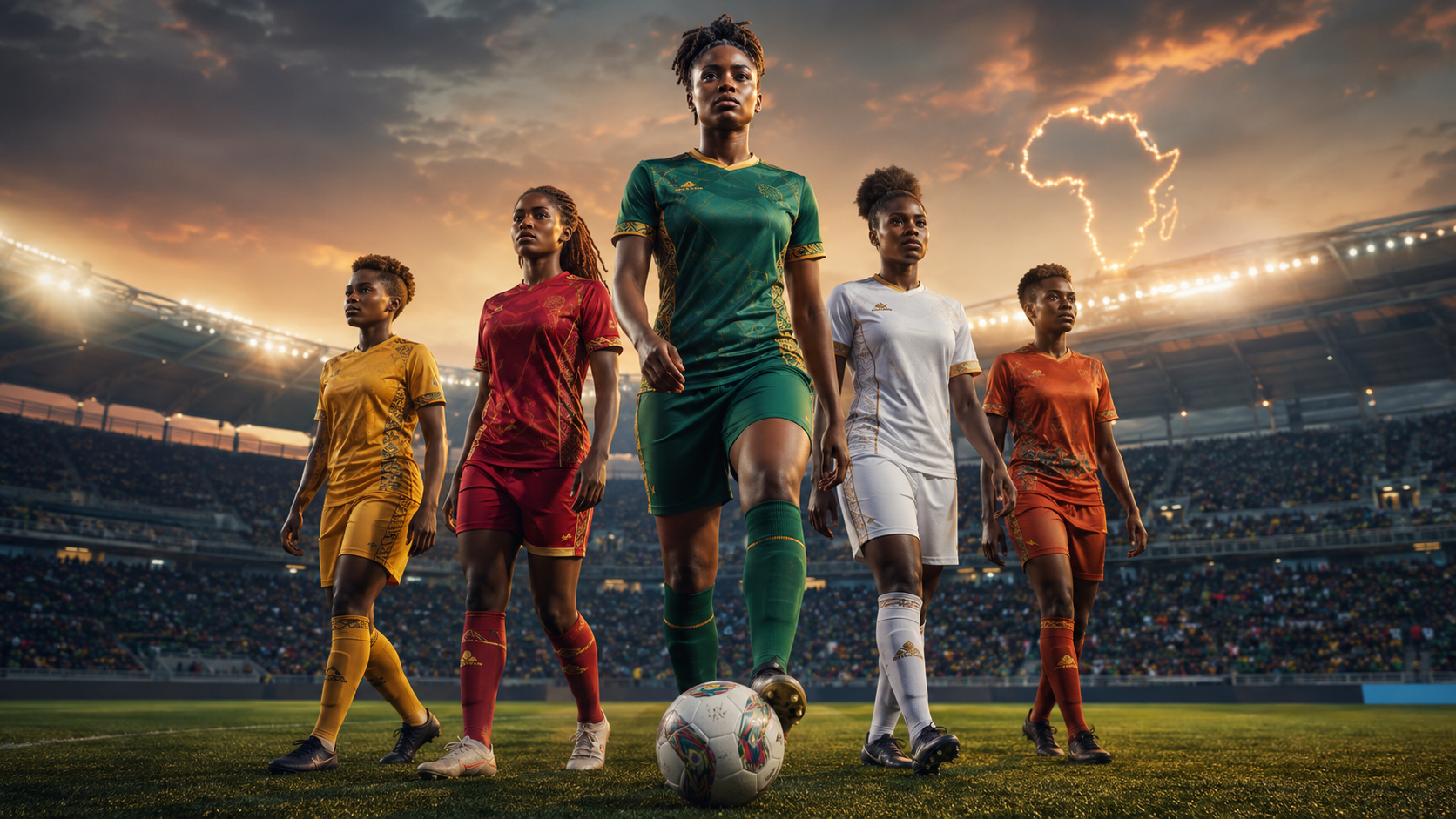
From Nigeria’s Miracle Usani to Egypt’s Habiba Essam and Tanzania’s Winfrida Gerald, a new generation is arriving at the Women’s Africa Cup of Nations. The question is whether African football can turn their visibility into lasting value.
The biggest names at the 2026 Women’s Africa Cup of Nations are already familiar.
Nigeria have the pedigree of ten continental titles. South Africa arrive with established champions. Morocco carry the ambition of a host nation that has invested heavily in becoming a football power. Zambia possess some of the most dangerous attacking talent in the women’s game.
But the most important story in Morocco may belong to the players whose names are not yet known around the world.
As WAFCON 2026 begins, a new generation of African footballers is preparing to step onto the continent’s largest women’s football stage. Some are teenagers. Others have dominated domestic competitions without receiving international attention. Many are one decisive goal, one commanding performance or one viral highlight away from changing the direction of their careers.
ESPN has identified 20 potential breakout players and wonderkids to watch during the tournament. The list is exciting, but for Africa and its diaspora, it also raises a larger question:
What happens after the world discovers them?
A Bigger WAFCON Creates a Bigger Stage
The 2026 tournament represents an important expansion of African women’s football.
For the first time, WAFCON features a record 16 national teams divided into four groups. Morocco, Algeria, Senegal and Kenya form Group A. South Africa, Côte d’Ivoire, Burkina Faso and Tanzania make up Group B. Defending champions Nigeria face Zambia, Egypt and Malawi in Group C, while Ghana, Cameroon, Mali and Cape Verde compete in Group D. CAF’s official tournament announcement confirms that matches will be staged in Rabat and Casablanca.
The expansion brings countries such as Cape Verde, Kenya and Malawi into a larger continental spotlight. It also creates more opportunities for players from under-scouted leagues to compete against Africa’s established powers.
There is more at stake than the continental trophy. WAFCON is also part of Africa’s qualifying pathway to the 2027 FIFA Women’s World Cup in Brazil. Four teams will qualify directly, while two more can reach the global tournament through the inter-confederation playoff system, according to FIFA’s African qualifying overview.
That makes every group-stage performance an audition—not only for national glory, but for the world.
The New Faces of African Women’s Football
Nigeria’s Miracle Usani represents the new generation emerging behind one of Africa’s most successful national teams.
The young defender has already gained senior international experience and enters a Super Falcons environment where expectations are uncompromising. Nigeria are not simply trying to win another African title. Captain Rasheedat Ajibade has spoken about the team’s desire to become a genuine global contender.
For Usani, WAFCON provides an opportunity to show that Nigeria’s future can be as formidable as its past. A composed tournament against elite attackers could quickly move her from promising defender to a serious target for clubs outside Africa.
Egypt’s Habiba Essam offers a different kind of possibility.
The Al Ahly attacker began playing senior football at a remarkably young age and has already competed in the CAF Women’s Champions League. She combines midfield creativity with the ability to play closer to goal, giving Egypt a player capable of producing the unexpected.
Her presence is particularly significant because Egypt remain an emerging force in African women’s football. A breakthrough tournament for Essam would not only elevate her profile; it could help expand the visibility of the women’s game in one of the continent’s largest football markets.
Morocco’s Kautar Azraf enters the tournament carrying the expectations attached to both a host nation and one of Europe’s most famous club systems.
The 18-year-old Barcelona prospect earned her first senior Morocco call-up after impressing at youth level. CAF described her as one of the country’s brightest prospects, with the pace and directness to add a new dimension to Morocco’s attack. Her selection illustrates how Morocco is attempting to connect domestic development, European academies and senior international football into a coherent pathway.
For the Atlas Lionesses, Azraf could also symbolize a transition. Experienced leaders such as Ghizlane Chebbak have helped establish Morocco as a continental force. The next challenge is building a generation capable of sustaining that progress.
Tanzania’s Winfrida Gerald may be one of the tournament’s most compelling young stories.
At only 18, the forward has already been described by CAF as one of East Africa’s most exciting prospects. Her rise reflects the widening geography of African women’s football. For years, international attention was concentrated on a small group of national teams. Players from Tanzania, Malawi, Kenya and Cape Verde now have an opportunity to force scouts and audiences to look beyond the traditional powers.
Côte d’Ivoire’s Habibou Ouedraogo, meanwhile, arrives with numbers that demand attention.
The ASEC Mimosas forward was named the best player at the 2025 CAF Women’s Champions League. She also reportedly scored 33 league goals in 2024 and followed that with 39 in 2025. CAF calls her one of the continent’s most exciting attacking talents.
Those statistics would generate transfer speculation almost anywhere else in world football. WAFCON now gives Ouedraogo the opportunity to prove that her production can translate to the international stage.
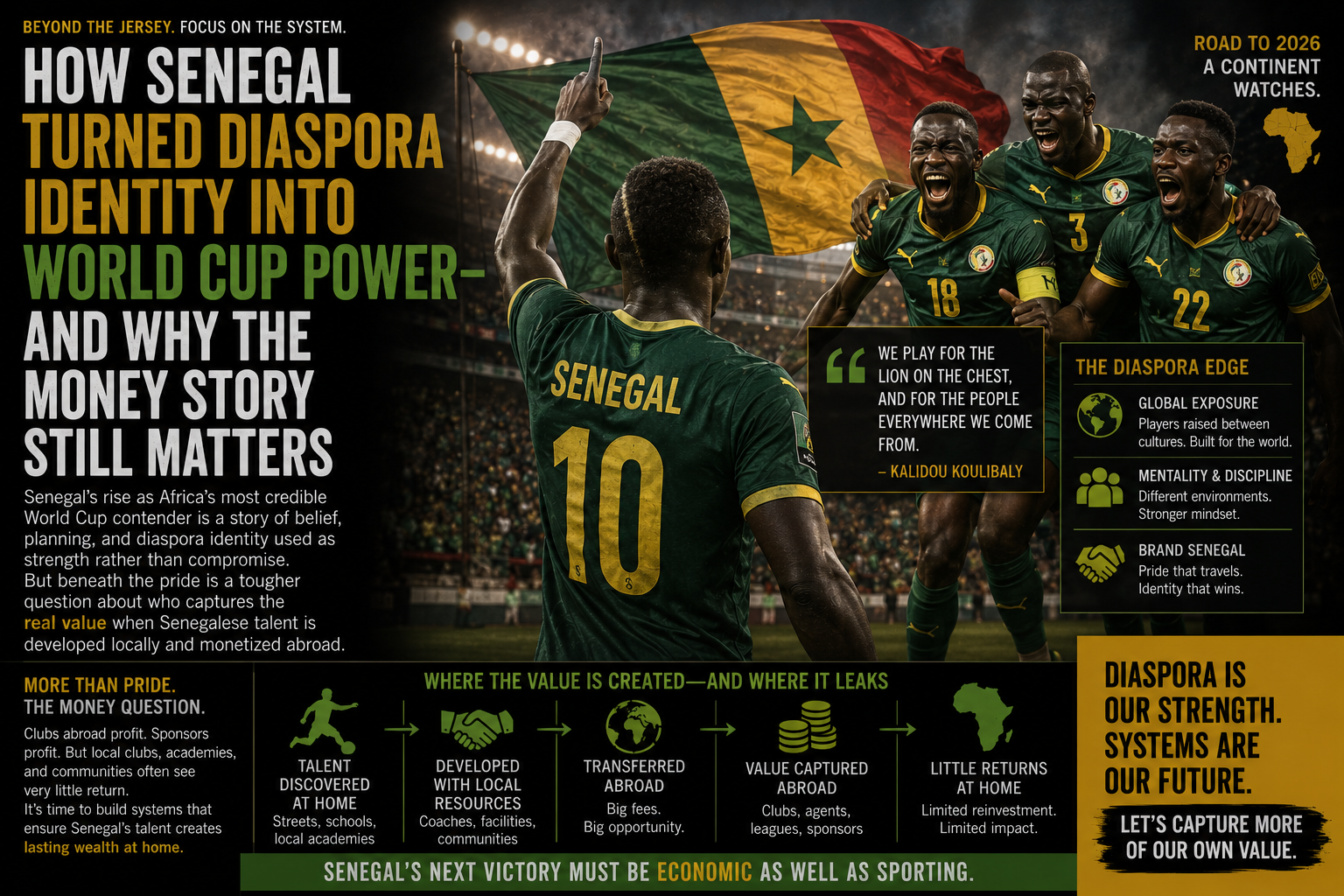
Africa Must Capture the Value It Creates
Stories about “wonderkids” often celebrate discovery. They rarely examine who benefits from that discovery.
When an African player delivers a breakout performance, European clubs may acquire her at a relatively modest cost. Agents gain new clients. Broadcasters gain compelling content. Sponsors gain marketable personalities. Foreign leagues gain talent developed through African families, communities, academies and clubs.
Too often, the African institutions that produced the player receive the smallest share of the value.
This is why WAFCON must be viewed as more than a competition. It is also a marketplace for intellectual property, media rights, sponsorship, athlete branding and football development.
African clubs need stronger contracts and more effective transfer protections. Domestic leagues need reliable broadcasting and digital distribution. Players need professional representation before international interest arrives—not after. National federations must treat women’s academies as long-term infrastructure rather than temporary tournament projects.
The diaspora also has a role.
African-owned businesses in Europe and North America can sponsor athletes directly. Media platforms can tell player stories before Western outlets declare them discoveries. Investors can support academies, analytics companies, training facilities and women’s clubs. Diaspora professionals in law, marketing and finance can help players protect their image rights and commercial futures.
Watching the matches matters. Building an economy around the women playing them matters even more.
Representation Beyond the Pitch
The emergence of these players carries cultural power as well.
Across Africa and the diaspora, millions of girls grow up seeing men’s football presented as a possible career while women’s football is treated as an exception. WAFCON challenges that hierarchy.
When a teenager from Dar es Salaam, Cairo, Abidjan or Rabat appears on an international broadcast, she expands the imagination of every girl who recognizes her accent, complexion, neighborhood or family story.
This is not symbolic representation without material consequences. Visibility can influence whether parents support a daughter’s athletic ambitions, whether schools establish girls’ teams, whether local companies offer sponsorship and whether federations invest in qualified coaches and safe facilities.
But inspiration should not become an excuse for underinvestment. African women footballers deserve more than applause for overcoming difficult conditions. They deserve professional environments that do not require extraordinary struggle simply to participate.
The Breakout We Should Really Be Watching
One of the young players highlighted before WAFCON will probably produce a defining moment.
It may be Usani shutting down an established international forward. It may be Essam creating the goal that announces Egypt’s arrival. Azraf could electrify the Moroccan crowd. Gerald could introduce a global audience to Tanzania’s potential. Ouedraogo may prove that her extraordinary club numbers belong on the international stage.
Those individual breakthroughs will be worth celebrating.
The greater measure of progress, however, will come after the tournament. Will the players receive stronger contracts? Will their clubs be compensated properly? Will sponsors stay involved once the final is over? Will domestic audiences be able to continue watching them? Will the next generation inherit a better system?
WAFCON 2026 will show the world that Africa does not lack women’s football talent.
The real challenge is ensuring that Africa no longer loses control of the value that talent creates.Read Next
- WAFCON 2026 Is Africa's Women's Football Moment. The Diaspora Should Be Watching
- AfCFTA Has A Local Business Problem. Solving It Could Change African Trade
- Nigeria Wins Gold on Its Spelling Bee World Cup Debut in Shanghai
Discover more from ADUNAGOW Magazine
Subscribe to get the latest posts sent to your email.