Lagos Turned Mawlid Into a Public Language of Peace
Thousands of worshippers marked Eid al-Mawlid in Lagos with processions, prayers, recitations, charity, and a message that matters beyond one holiday: African public culture can still make room for unity when daily life is under pressure.
Lagos did not just observe a holiday this week. It filled the street with a public language of peace.
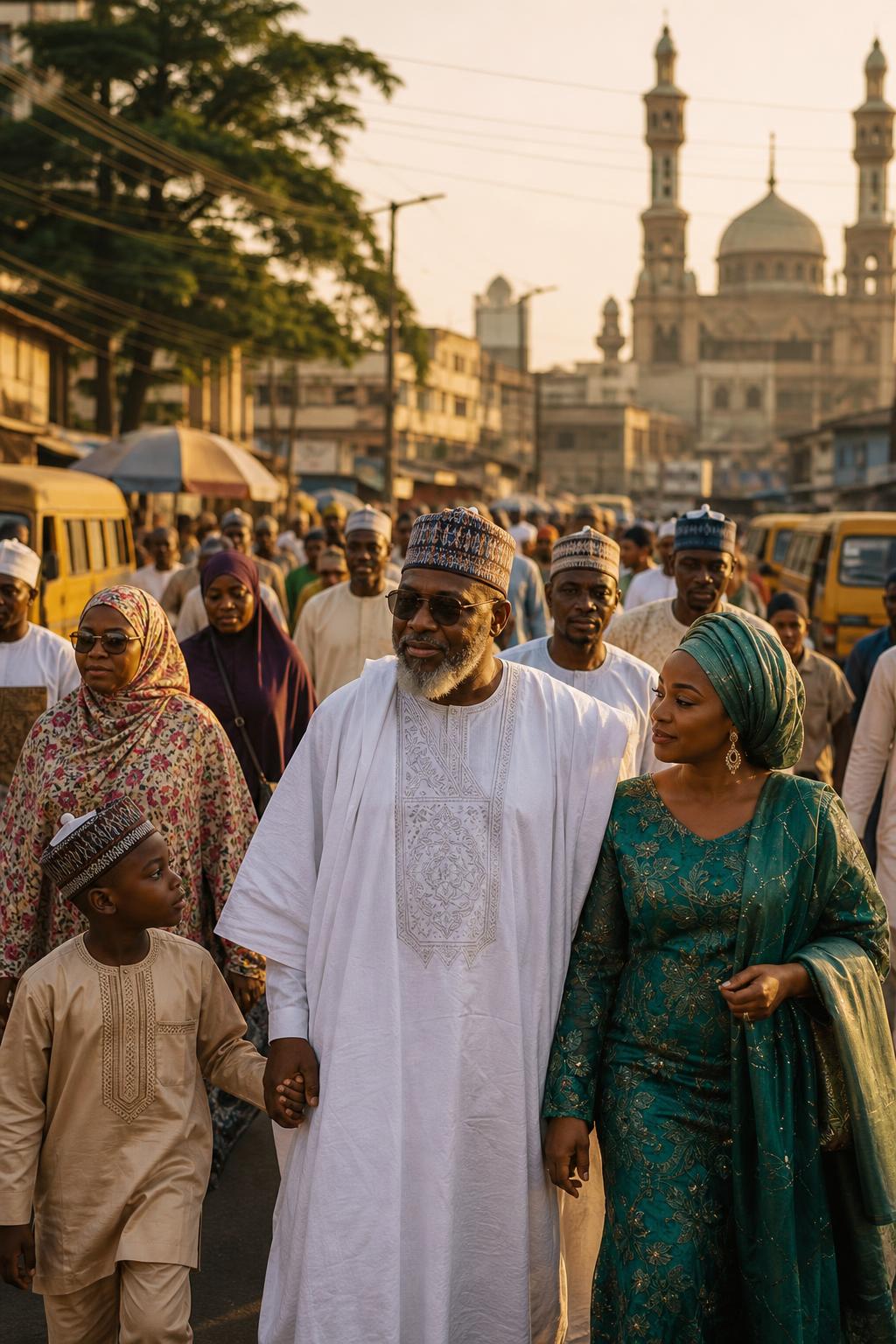
On Tuesday, August 25, 2026, thousands of Muslim worshippers gathered in parts of Lagos to mark Eid al-Mawlid, the commemoration of Prophet Muhammad's birth. According to Africanews and the Associated Press, the day included processions, prayers, Quran recitations, lectures, and charity activities. Nigeria's Federal Ministry of Interior had declared the day a public holiday, giving the celebration national recognition as communities gathered across the country.
The most important part of the Lagos story is not the crowd size alone. It is the message the crowd carried.
Participants and organizers used the occasion to speak about unity, peaceful coexistence, faith, community ties, and solidarity. In a city where daily life can be fast, expensive, and exhausting, Mawlid became more than a religious calendar event. It became a visible reminder that public culture can calm a city, gather people across generations, and point citizens toward something larger than survival.
That matters because Nigeria is too often described from the outside through crisis, conflict, election tension, insecurity, or economic strain. Those realities cannot be ignored. Many households are under pressure from rising living costs, and religious identity can become a fault line when politics and hardship sharpen division. But that is not the whole country. Lagos also contains traditions of gathering, giving, worship, procession, music, and neighborhood discipline that tell a fuller story of civic life.
Mawlid sits inside that fuller story.
For many Muslim communities, the celebration of Prophet Muhammad's birth is an occasion for reflection, praise, teaching, generosity, and remembrance. It is not observed in the same way by every Muslim community, and ADUNAGOW should avoid flattening that diversity. But in Lagos this week, the public face of the celebration was clear: worshippers moved through the city with faith at the center and peace as the public message.
There is development language hidden in that image.
Peace is often treated as a political slogan or a security objective. In real life, peace is also built through habits. People learn it through shared spaces, respected rituals, charity networks, religious leadership, family participation, and public messages repeated often enough to shape behavior. A procession can be spiritual, but it can also be civic. It tells the city: we are present, we are organized, we belong here, and we want to live together.
That is why the interfaith message matters. Lagos is one of the world's great Black cities, dense with ambition, faith, commerce, stress, creativity, and competition. In such a city, coexistence is not abstract. It is negotiated in markets, schools, workplaces, buses, homes, and streets. When Muslim worshippers use a major religious gathering to emphasize unity between Christians and Muslims, they are doing more than offering a polite phrase. They are naming the kind of public life Nigeria needs in order to keep moving.
For diaspora readers, this story travels in a personal way.
African identity abroad is often carried through food, language, churches, mosques, family WhatsApp groups, clothes, music, and holiday gatherings. Religious processions at home remind the diaspora that culture is not only what is performed on a stage. It is also what holds people together when money is tight, politics is loud, and the future feels uncertain. A Lagos Mawlid procession can speak to Muslims in London, Atlanta, Toronto, Houston, Johannesburg, and Dubai, but it can also speak to wider African communities that understand the value of public ritual and collective restraint.
There is also a media lesson here. Africa does not need coverage that pretends everything is fine. But Africa also does not need a daily diet of stories that make ordinary dignity invisible. Lagos Mawlid offers another frame: a city under pressure still capable of prayer, color, movement, charity, and peace.
That is not a small thing.
In many African societies, religious communities provide more than worship. They organize mutual aid, teach moral responsibility, respond to hardship, preserve memory, and create social trust. When those communities use public moments to call for unity, they become part of the infrastructure of peace. Not the kind made of concrete and steel, but the kind that determines whether neighbors can keep seeing one another as neighbors.
The point is not to romanticize hardship or declare Lagos harmonious because one celebration was peaceful. The point is to recognize civic strength where it appears. A city can be complicated and still produce beauty. A country can be under pressure and still practice solidarity. A religious holiday can be spiritual for believers and meaningful for the wider public at the same time.
This week, Lagos offered that reminder in motion.
The streets carried prayers. The gatherings carried charity. The message carried unity. And for a continent too often asked to explain its divisions, that public language of peace deserves to be seen.
Read Next
- Angelique Kidjo's Hollywood Walk of Fame Moment Is Bigger Than One Star - https://www.adunagow.net/angelique-kidjo-hollywood-walk-of-fame/
- Johnny Clegg's Tribute Shows Why Culture Can Still Hold a Country Together - https://www.adunagow.net/johnny-clegg-south-africa-tribute/
- West Africa's Development Bank Just Got a Credibility Upgrade - https://www.adunagow.net/west-africa-ebid-development-bank-credit-upgrade/
Sources
- https://www.africanews.com/2026/08/26/thousands-gather-in-lagos-nigeria-to-celebrate-prophet-muhammads-birth/
- https://fmino.gov.ng/fg-declares-tuesday-public-holiday-as-nation-marks-eid-ul-mawlid/
- https://www.reutersconnect.com/item/mawlid-al-nabi-in-nigeria/dGFnOnJldXRlcnMuY29tLDIwMjY6bmV3c21sX01UMUFOQURMMDAwVldBWjM1
Discover more from ADUNAGOW Magazine
Subscribe to get the latest posts sent to your email.