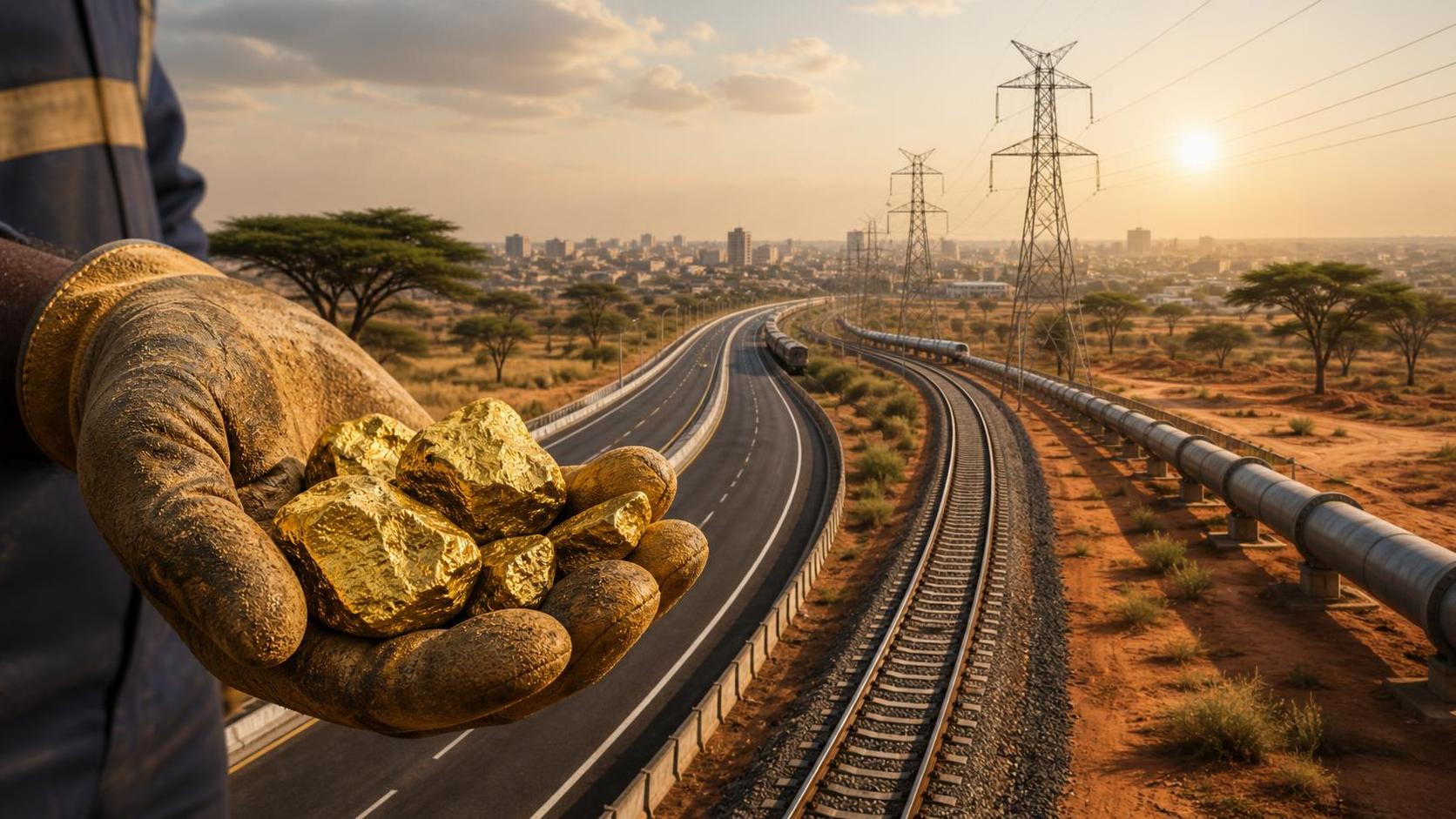
Mali says mining reforms could unlock hundreds of millions of dollars for infrastructure. The bigger question is whether gold revenue can become visible public value.
Mali says its mining reforms could help unlock up to $883 million for public projects, putting one of Africa's oldest development questions back under the spotlight: when a country is rich in minerals, who actually sees the benefit?
According to Africanews, Mali's finance minister says recent mining-sector changes could finance energy, water, and transport projects. The infrastructure development fund created in 2023 has reportedly mobilized about $194 million between January 2025 and June 2026, with officials pointing to rail upgrades, road construction, boat purchases, and support for Mali Airlines as possible uses.
That is the headline. The real story is harder.
The Resource Sovereignty Test
Mali's 2023 mining code increased royalties and expanded the state's stake in mining projects. It was designed to capture more value from a sector that has long produced wealth without always producing enough visible public development. But the overhaul has also created friction with operators, including Canada's Barrick, and it comes under a military-led government where transparency questions matter.
For ADUNAGOW readers, the story is not simply whether Mali can pressure mining companies for more money. It is whether resource sovereignty can become public infrastructure.
Gold is central to Mali's economy, but the formal system captures only part of the value. Africanews cited SWISSAID estimates that between 30 and 57 metric tonnes of Malian gold, worth roughly $1.98 billion to $3.77 billion, leave the country undeclared each year. Over a decade, the same estimate puts undeclared gold at about 300 tonnes, valued around $13.5 billion.
Those numbers explain why the government wants tighter control. Mali has also established the Malian Office of Precious Substances, a state body meant to regulate and centralize artisanal gold trade. That matters because artisanal mining is not a side issue. It employs nearly two million people across hundreds of mining sites.
From Gold Revenue To Public Value
The opportunity is obvious: if more mining revenue stays in the public system, Mali could fund roads, power systems, water access, rail links, and transport capacity. Those are not abstract development goals. They shape whether farmers reach markets, whether businesses can move goods, whether families can access services, and whether young people see opportunity at home.
But the risk is just as clear. A bigger state share does not automatically mean better public outcomes. Resource nationalism can become development strategy, but it can also become another layer of political control if citizens cannot see where the money goes.
That is why the infrastructure fund is the test.
The most important question is not whether Mali can raise the money. It is whether Mali can publish the projects, track the spending, show the delivery, and make mining communities part of the benefit. If gold leaves the ground and citizens still cannot see roads, water, electricity, or jobs, the reform will feel like another extraction story with new managers.
Why The Diaspora Should Watch
For Africa's diaspora, this story lands beyond Mali. It speaks to a larger continental debate about value capture. From cocoa to lithium, oil, gas, gold, and critical minerals, African countries are trying to move from raw extraction toward domestic value, public revenue, and industrial power.
The language is changing. The demand is not just "own more." The demand is "build more."
Mali's mining-backed infrastructure fund gives that demand a measurable form. It can be judged by whether villages get roads, whether power projects move, whether transport links improve, whether artisanal miners are formalized instead of criminalized, and whether citizens can follow the money.
If Mali can turn mineral reform into credible infrastructure delivery, it will strengthen the case that African resource wealth can be negotiated differently. If it cannot, the story will become another reminder that gold in the ground does not guarantee development above it.
The world has seen African minerals enrich balance sheets for generations. Mali is now saying the next chapter should build roads, water, and power.
That is a promise worth watching closely.
Read Next
- Africa’s Solar Power Shift Is Becoming a Finance Story
- Morocco’s EV Battery Factory Is Africa’s Clean-Tech Industrial Test
- AfCFTA Has A Local Business Problem. Solving It Could Change African Trade
Discover more from ADUNAGOW Magazine
Subscribe to get the latest posts sent to your email.