Africa's Solar Power Shift Is Becoming a Finance Story
Landmark funding deals for off-grid solar companies show how mobile payments, household demand, and investor confidence could help expand electricity access beyond the grid.
For years, Africa's electricity-access debate has been framed around one big question: when will the grid arrive?
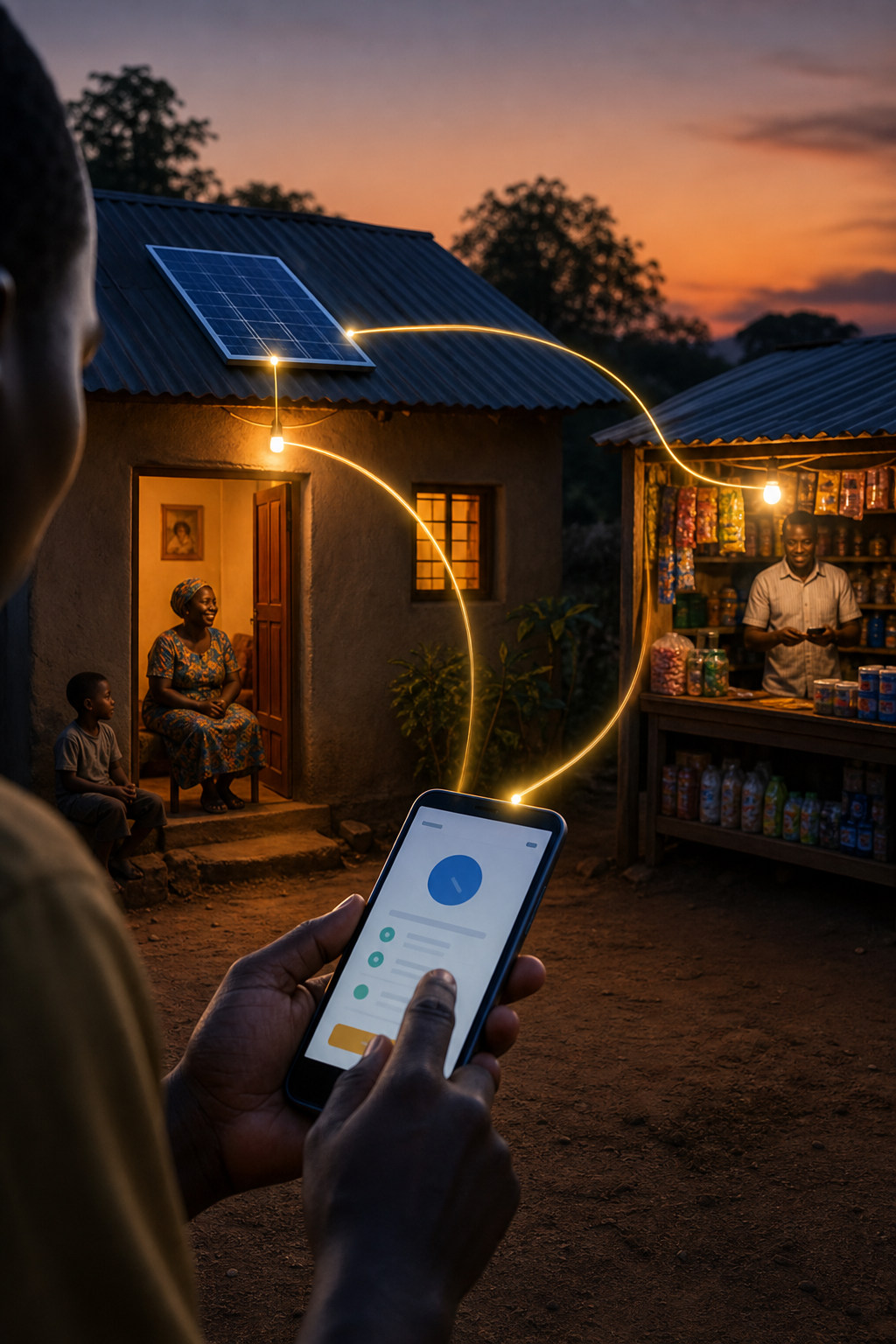
But for millions of households and small businesses, the more immediate answer has often arrived in smaller pieces: a solar panel on a roof, a battery in the home, a phone charging at night, a refrigerator that can keep goods cold, and a payment plan that makes the system possible without a large upfront cost.
Now that model is entering a more serious financial phase.
The Associated Press reported on July 31 that major financing deals by two of Africa's largest off-grid solar companies, d.light and Sun King, are raising hopes that mainstream capital markets could become a bigger source of funding for the sector. The details sound technical, but the basic idea is simple: when customers buy solar home systems through small pay-as-you-go installments, those future payments can become financeable assets.
In other words, the payment history of African households can help attract the next round of capital.
That is a major shift from the older development story, where off-grid energy was often treated mainly as a donor-backed solution for communities beyond the reach of national utilities. Grants and development finance still matter, especially in markets where commercial capital sees too much risk. But the new momentum suggests that investors are beginning to view parts of the off-grid solar sector as mature enough for instruments like green bonds and securitized debt.
AP cited two important examples. d.light's receivables platform passed $1 billion in cumulative purchasing capacity after a $50 million green bond listed in London. Sun King secured $286 million through securitized debt. Both companies sell solar home systems and appliances through pay-as-you-go models, allowing customers to make smaller payments over time, often through mobile apps.
For readers outside finance, the key point is this: small payments can add up to infrastructure.
When a family pays for power in installments, that record can become part of a larger pool of expected repayments. Investors can then provide capital against that pool, giving solar companies money upfront to reach more customers. Done well, the model can speed up access to power for households that cannot wait for a national grid connection and cannot afford to buy a full system in cash.
This matters because electricity is not just a utility. It is a foundation for almost everything else.
A reliable light changes how children study. Phone charging changes how small traders communicate with customers. Refrigeration changes food storage and small retail. Power for basic appliances can extend business hours, improve safety, and reduce reliance on expensive or dirty alternatives. In rural and peri-urban communities, energy access can be the difference between being connected to the modern economy and being locked out of it.
The off-grid solar finance story also complicates how Africa is discussed globally. Too often, the continent's infrastructure gaps are described only as deficits. This story shows demand, repayment behavior, mobile-money habits, and distributed technology becoming part of a financial architecture.
That does not mean the model is risk-free.
The same financing tools that can unlock growth can also create pressure. Investors want predictable returns. Companies want repayment. Customers need electricity that remains affordable. If financing becomes too aggressive, the people who most need energy access could face products they cannot sustain or payment terms they do not fully understand.
That is why the next phase of off-grid solar should not be judged only by how much money it raises. It should also be judged by who benefits, how transparent the contracts are, how well products perform over time, and whether capital reaches smaller operators serving harder-to-reach communities.
There is also a scale question. Large companies with years of repayment data can structure deals that smaller firms cannot. That could help professionalize the sector, but it could also concentrate power in a few platforms. African regulators, investors, and development institutions will need to watch whether the market creates real competition or simply rewards the biggest players.
Still, the larger signal is important.
Africa's energy transition is not only about national megaprojects, lithium supply chains, or utility-scale generation. It is also about the financial systems that can turn everyday demand into deployable infrastructure. A household paying by phone for a solar kit may not look like a capital-markets story. But aggregated across millions of customers, those payments can influence how electricity access is financed.
For diaspora readers, this is a useful reframing. Supporting African development is not only about charity, remittances, or waiting for governments to build everything. It is also about understanding the markets, financial tools, and consumer behavior already reshaping the continent.
The promise of off-grid solar finance is practical: power can move faster than the grid.
The test is whether the money moves in a way that keeps African households at the center.
Read next:
- Morocco's EV Battery Factory Is Africa's Clean-Tech Industrial Test: https://www.adunagow.net/africa/morocco-ev-battery-factory-africa-clean-tech/
- Ethiopia's M-PESA Electricity Move Shows African Fintech Becoming Infrastructure: https://www.adunagow.net/africa/ethiopia-mpesa-electricity-payments-africa-fintech/
- AfCFTA Has A Local Business Problem. Solving It Could Change African Trade: https://www.adunagow.net/africa/afcfta-local-business-problem-african-trade/
Discover more from ADUNAGOW Magazine
Subscribe to get the latest posts sent to your email.