AfDB financing for Gotion Power Morocco puts a new question in front of Africa's green transition: can the continent move from exporting inputs to building the technology the future runs on?
Africa's green transition is often described through what the continent has underground: cobalt, lithium, manganese, copper, graphite and the other strategic minerals feeding global demand. Morocco's latest battery move points to a more important question: what if Africa stops being treated only as the place where clean-tech supply chains begin, and becomes the place where they are built?
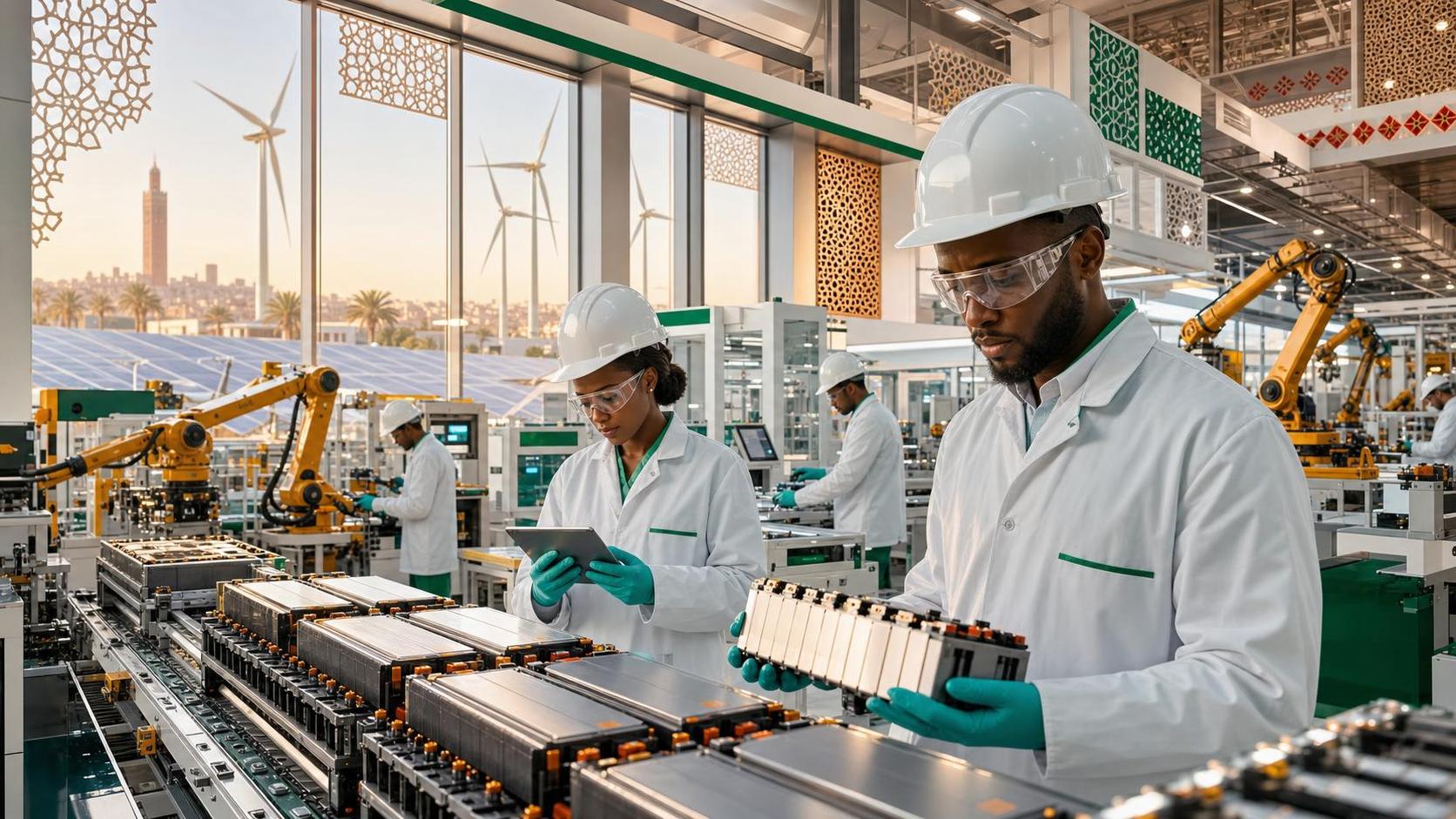
The African Development Bank has approved a EUR 100 million loan to Gotion Power Morocco for an integrated lithium iron phosphate battery gigafactory in the Rabat-Sale-Kenitra Free Trade Zone. The project is being framed as Africa's first integrated LFP battery gigafactory, with the bank also planning to mobilize up to EUR 141 million from additional partners.
That matters because batteries are no longer a narrow electric-car story. They are energy infrastructure. They sit behind electric mobility, renewable power storage, industrial resilience, logistics, and the race to control the next generation of manufacturing.
For Africa, the old model is familiar: export raw value, import finished technology, then pay a premium to use the future. The Morocco project suggests another path. If it delivers, the continent gains a working example of how automotive capacity, renewable-energy strategy, finance, and industrial policy can meet inside one factory.
Morocco already has advantages. It has built one of Africa's strongest automotive ecosystems, developed industrial zones tied to export markets, and positioned itself as a bridge between African, European, and global supply chains. A battery plant does not automatically turn that ecosystem into a continental win. But it does create a sharper test: can Africa's clean-energy industrialization produce skilled jobs, local supplier networks, technology transfer, and regional value rather than just another headline factory?
The financing details show why this is more than national branding. AfDB's role gives the project a development-finance signal, not just a corporate investment story. The bank's planned additional mobilization also places the factory inside a wider conversation about Africa's financial architecture and its ability to back strategic industries at scale.
There are fair questions. Who benefits from the value chain? How much local integration will actually happen? Will the factory build African technical capacity or simply host imported expertise? Can suppliers from beyond Morocco plug into the opportunity? And will clean-tech manufacturing become accessible to more African markets, or remain concentrated in the few countries already closest to capital and export logistics?
Those questions should not weaken the story. They make it stronger. Development is not just about announcing projects; it is about watching whether the project changes the pattern.
For the diaspora, this is the part worth paying attention to. Africa's global image is still too often trapped between crisis coverage and raw potential. A battery gigafactory gives readers a different lens: African countries competing for the industries that will define the next economy. That is a story of pride, but also of accountability.
If the Rabat-Sale-Kenitra plant becomes a real production hub, it could help make African clean-tech less dependent on imported finished systems. If it becomes a template, it could point toward a broader continental industrial play: process more value locally, train more specialized workers, finance more strategic factories, and connect clean energy to manufacturing instead of treating it as a separate policy dream.
Africa does not win the green transition by supplying everyone else's future at a discount. It wins when factories, skills, capital, and ownership start moving closer to the continent's own priorities.
Morocco's battery project will not answer that challenge alone. But it gives Africa a visible test case. The question now is whether this becomes a flagship, or the beginning of a larger industrial shift.
Read Next
- Ethiopia's M-PESA Electricity Payments Show African Fintech Becoming Infrastructure
- AfCFTA Has A Local Business Problem. Solving It Could Change African Trade
- Nigeria-Morocco Gas Pipeline: West Africa's 7 Billion Test Of Regional Power
Discover more from ADUNAGOW Magazine
Subscribe to get the latest posts sent to your email.