When Africans Become Foreigners to Africans
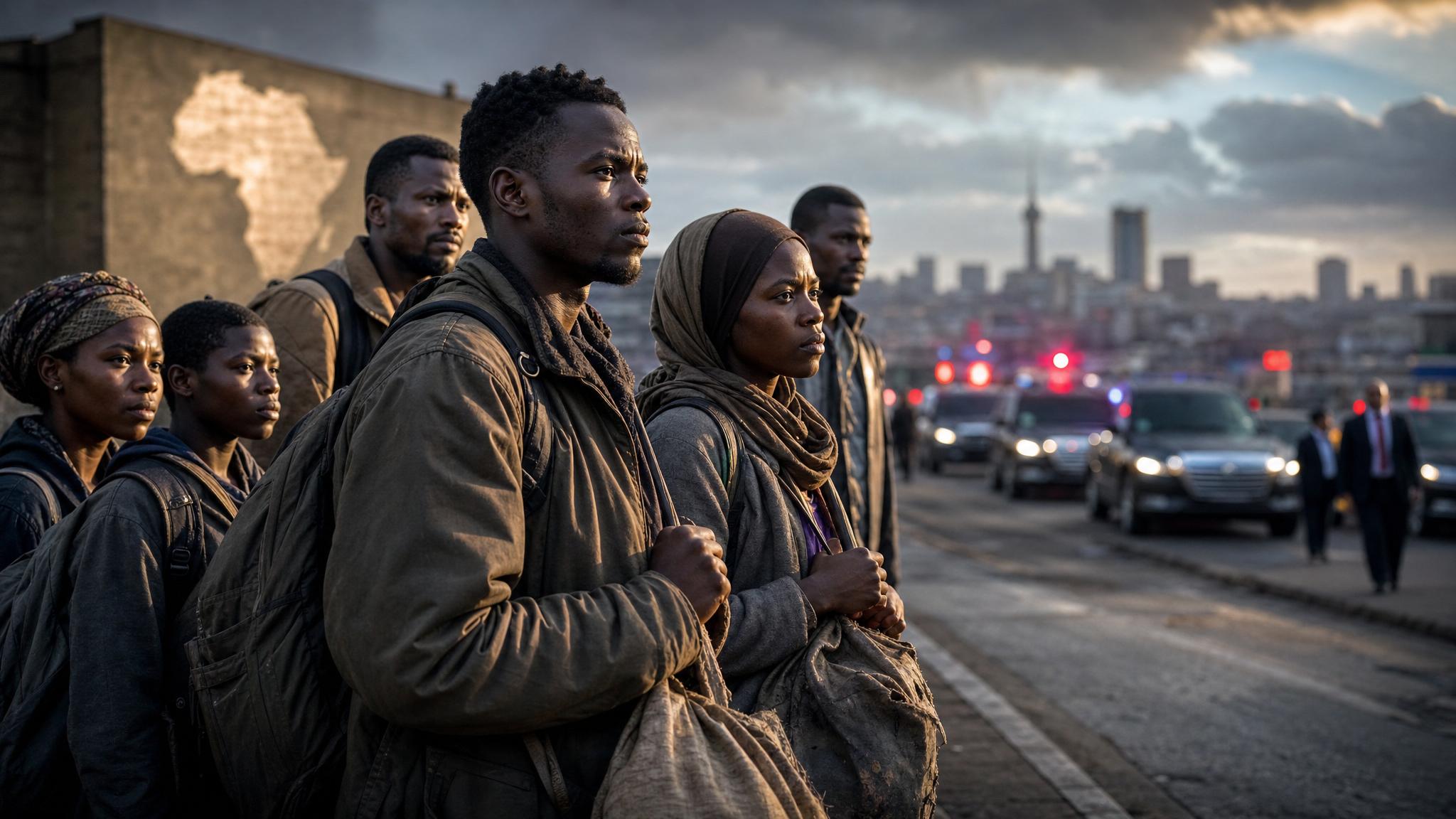
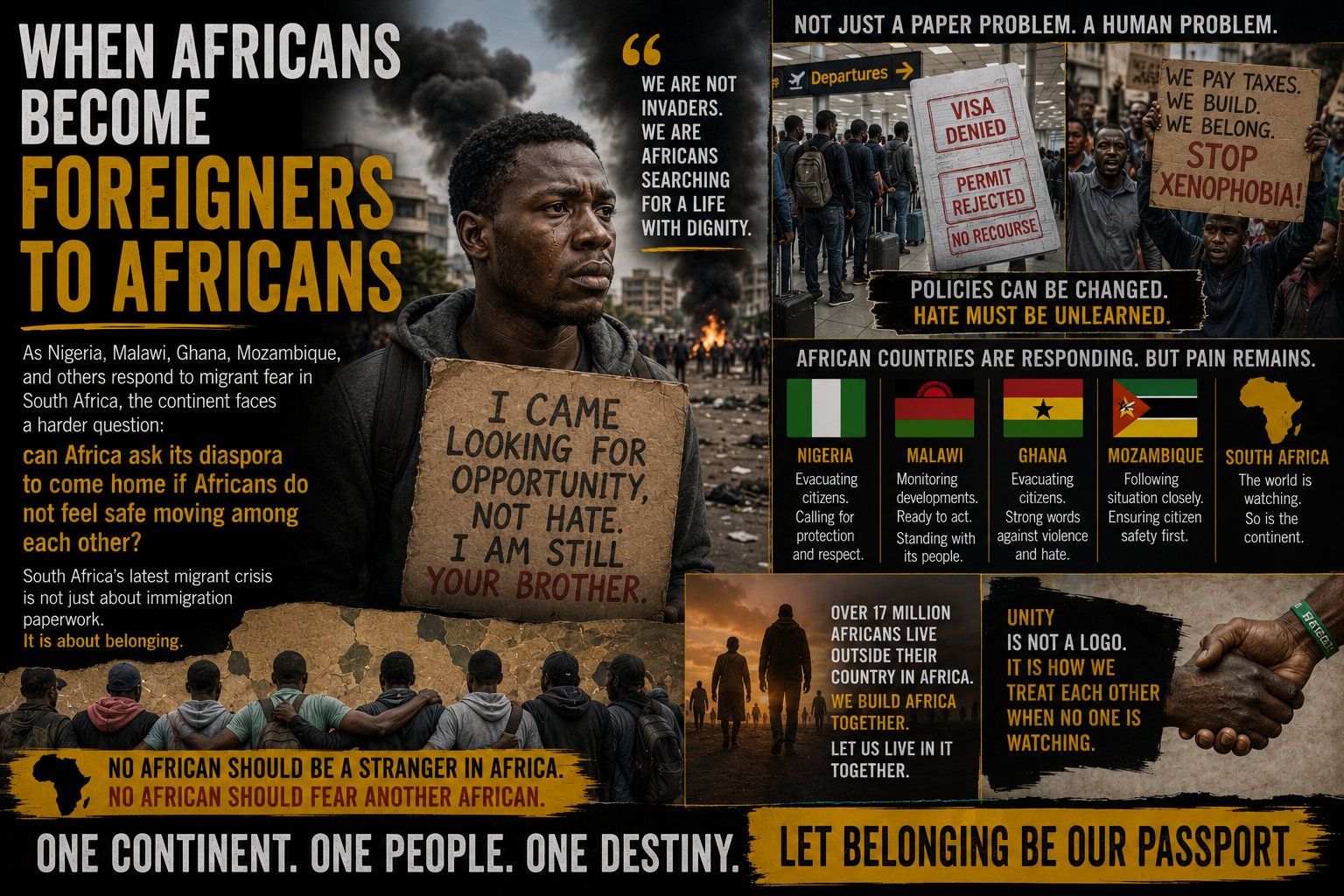
As Nigeria, Malawi, Ghana, Mozambique, and others respond to migrant fear in South Africa, the continent faces a harder question: can Africa ask its diaspora to come home if Africans do not feel safe moving among each other?
South Africa's latest migrant crisis is not just about immigration paperwork. It is about belonging.
Across the region, African governments are responding to growing fear among their citizens in South Africa. Africanews listed a current report that South Africa repatriated 2,745 foreigners in one week. Al Jazeera reported that Nigeria repatriated a first group of 260 nationals, while Ghana, Mozambique, and Malawi have also carried out similar operations in recent weeks.
Those numbers are not just statistics. They represent workers who left home to earn a living, traders who crossed borders for opportunity, families trying to stay safe, and students or young professionals who believed another African country could be a place to build.
Now the emotional question is unavoidable: what does Pan-African unity mean when Africans are afraid of other Africans?
A June 30 Deadline and a Bigger Warning
The immediate trigger is urgent. Al Jazeera reported that anti-migrant groups armed with sticks, whips, and shields have marched through parts of South Africa demanding that undocumented foreigners leave by June 30.
No country is wrong to debate immigration policy. South Africa, like any nation, has the right to manage documentation, labor markets, crime concerns, and public services. But there is a line between lawful enforcement and community intimidation. Once fear becomes the message, the story moves beyond policy and becomes a test of social trust.
For African migrants, that test is personal. A passport, accent, surname, or market stall can suddenly become a risk marker. For neighboring governments, it becomes a diplomatic burden. For the African diaspora watching from abroad, it weakens one of the continent's most important promises: that Africa is not only a place of origin, but a place of return, investment, belonging, and shared future.
The Return Economy Depends on Trust
ADUNAGOW often covers African mobility as a development issue. Remittances, trade, culture, tourism, startups, and professional networks all depend on movement. The African diaspora cannot build across borders if those borders are surrounded by fear.
This is why the South Africa story matters beyond South Africa. A Nigerian trader leaving Johannesburg, a Malawian worker seeking evacuation, or a Ghanaian family weighing safety is part of a broader continental question: can African governments protect both citizens and guests?
The answer matters for business. It matters for education. It matters for families split across cities, countries, and continents. It also matters for the credibility of every speech about African integration, free movement, and continental cooperation.
Africa's development story cannot be built only on summits and slogans. It has to survive taxi ranks, townships, markets, border posts, police stations, and neighborhood rumors.
Migrant Dignity Is Not Anti-Law
The most responsible position is not denial. South Africa has real pressures: unemployment, inequality, organized crime, strained services, and frustration in communities that feel abandoned. Those problems deserve serious governance, not silence.
But blaming foreign Africans is a shortcut that rarely fixes the actual system. It can turn poor communities against other poor communities while the deeper failures remain untouched. When migrants become the easiest target, accountability moves away from policy, policing, labor protections, and economic reform.
Migrant dignity and lawful immigration control can exist together. A country can require documentation without tolerating mob threats. It can investigate crime without criminalizing entire nationalities. It can protect public services without making foreign Africans live in fear.
That balance is where leadership is tested.
Pan-Africanism Must Be Practical
Pan-Africanism is often celebrated in music, sports, fashion, and political language. But its real test comes when life gets uncomfortable.
Can South Africa protect its citizens from real economic pressure while also protecting foreign Africans from collective punishment? Can neighboring countries defend their nationals without turning the crisis into a regional insult contest? Can African media cover the story without inflaming nationality wars?
Those questions matter because the African diaspora is watching. Many people abroad already live with the pain of being treated as outsiders in Europe, North America, the Gulf, and elsewhere. Seeing similar exclusion inside Africa creates a different wound.
If Africans can become foreigners to Africans, then unity has to become more than identity. It has to become policy, protection, and accountability.
What Should Happen Next
South Africa needs clear, lawful, transparent immigration enforcement that does not outsource power to mobs or pressure groups. Regional governments need consular support that protects people without escalating hostility. African Union and regional bodies should treat repeated xenophobic pressure as a continental governance issue, not a cycle of isolated incidents.
Civil society and media also have a role. The story should not be reduced to shouting matches between nationalities. The better question is: what conditions make ordinary Africans feel forced to migrate, and what conditions make host communities feel abandoned enough to turn on them?
That is where the real story lives.
South Africa's repatriation crisis is a warning. It warns that development without dignity is fragile. It warns that mobility without safety is incomplete. And it warns that Pan-African unity cannot be measured only by speeches, flags, and hashtags.
It must be measured by whether Africans can move, work, study, trade, and live among each other without fear.
Discover more from ADUNAGOW Magazine
Subscribe to get the latest posts sent to your email.