KAMPALA, Uganda — Kampala has never lacked style. What the city—and much of Africa’s fashion industry—has needed is more infrastructure capable of turning creative talent into visibility, customers, partnerships and lasting businesses.
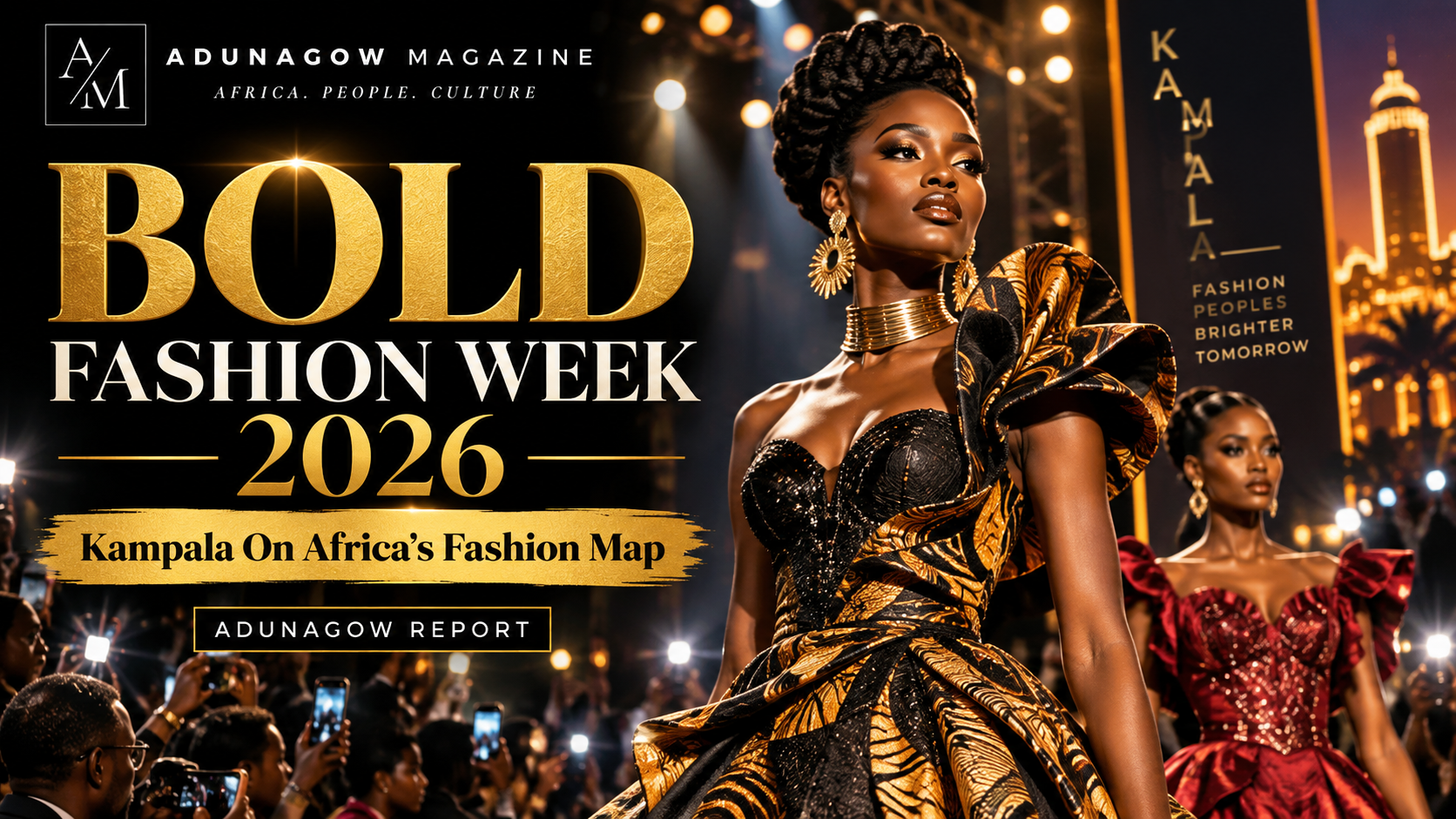
That is what made the inaugural Bold Fashion Week more significant than another collection of beautiful clothes moving down a runway.
Organized by Bold in Africa and Malembe Lifestyle, the new fashion platform made its debut at MoTIV in Bugolobi in August, bringing together designers, fashion professionals, media, consumers and other members of Uganda’s growing creative community. Organizers said approximately 320 guests, designers and media representatives participated across the inaugural edition.
At the center of the event were 10 African designers, nine representing Uganda and one from Nigeria: Axarya, Discreet Leather, Good Fibre, Joan Jade, Kifahari, Kwesh, Lamara, Ofumbi, Shurea Yasmin and Nigerian designer Yemi Shoyemi. Their collections moved across African heritage, craftsmanship and contemporary identity without treating “African fashion” as a single aesthetic.
That diversity matters.
Africa’s fashion story is increasingly being told not simply through traditional prints or clothing marketed around cultural symbolism, but through designers building distinct brands, experimenting with materials and silhouettes, and competing for consumers who can shop almost anywhere in the world.
Bold Fashion Week offered those designers something equally important: a platform at home.
From African Creativity to African Business
For ADUNAGOW Magazine’s global African and diaspora audience, perhaps the most interesting part of Bold Fashion Week happened beyond the runway.
The program deliberately connected fashion presentation with commerce.
Alongside the runway and creative-industry networking, organizers incorporated a public marketplace in partnership with the Kampala Artisan Market, allowing consumers to interact directly with participating brands and purchase their products. Contemporary coverage of the event similarly emphasized mentorship, networking and commercial opportunities as central parts of the Fashion Week model.
That may sound like a small distinction. It is not.
One of the persistent challenges facing African creative industries is the distance between being celebrated and being economically sustainable.
A designer can earn applause, social-media engagement and international attention while still struggling with manufacturing capacity, distribution, financing, pricing, retail access and consistent demand.
A runway creates aspiration.
A marketplace can create a customer.
Connecting the two begins to turn fashion from spectacle into an ecosystem.
One attendee captured that relationship in the organizers' post-event release: seeing the designers on the runway and then having the opportunity to shop their collections immediately afterward made the experience more tangible.
That is the model worth watching.
Fourteen Years Before the First Runway
Bold Fashion Week may be new, but the organization behind it is not.
Bold in Africa was founded in Kampala in 2012 as a physical and online platform designed to increase opportunities for African fashion entrepreneurs and give designers access to affordable retail space and greater exposure. Its work has gradually expanded from retail and curation toward incubation and fashion-business development.
The inaugural Fashion Week therefore represents something closer to an evolution than a launch from scratch.
Bold in Africa co-founder Nunu Mugyenyi has described the initiative as part of a broader effort to strengthen Uganda's professional fashion ecosystem and build meaningful connections between designers, audiences and the industry surrounding them.
That long-term thinking will ultimately determine whether Bold Fashion Week becomes important.
Africa does not necessarily need more events that appear for one glamorous weekend and disappear until the following year. Its designers need platforms capable of producing relationships—between creators and retailers, designers and investors, brands and consumers, Kampala and other African cities, and eventually African labels and global buyers.
Fashion weeks can become part of that infrastructure when they are designed accordingly.
Kampala Belongs in the Conversation
The debut also makes a broader statement about where African fashion can happen.
When international audiences discuss the continent's fashion industry, attention often gravitates toward a relatively small group of markets and cities. Lagos, Johannesburg, Cape Town, Accra and increasingly Dakar have developed recognizable positions within the broader conversation.
But African creativity has never been limited to the cities receiving the most global media attention.
Kampala has its own designers, photographers, stylists, models, retailers, musicians, filmmakers and creative entrepreneurs.
Bold Fashion Week gives those communities another mechanism through which they can become more visible to one another—and eventually to audiences beyond Uganda.
The presence of Nigerian designer Yemi Shoyemi alongside the Ugandan lineup was also an important signal. A successful African fashion ecosystem should not simply replicate national silos. Kampala should be able to host Nigerian designers. Lagos should make room for Ugandans. Nairobi, Kigali, Accra, Johannesburg, Abidjan and Dakar should increasingly function as interconnected nodes in an African creative marketplace.
That kind of intra-African exchange could ultimately matter as much as validation from Paris, London, Milan or New York.
The Diaspora Is Part of This Market
There is another audience African designers cannot afford to overlook: the diaspora.
Millions of Africans and people of African descent living in Europe, North America, the Middle East and elsewhere increasingly encounter African creativity through music, film, food, technology and fashion.
Fashion offers an especially powerful connection because cultural identity becomes something that can literally be worn.
But diaspora consumers also expect professional e-commerce, international shipping, consistent sizing, customer service, compelling brand storytelling and reliable digital discovery.
For designers appearing on platforms such as Bold Fashion Week, international visibility must therefore eventually be connected to international accessibility.
A diaspora customer in Toronto, Atlanta, London, Paris or Los Angeles who sees a Ugandan designer online should not have to wonder how to actually buy the product.
That is where Africa's creative-economy conversation moves from cultural influence to economic ownership.
What Happens After the Applause?
The first edition of Bold Fashion Week had considerable institutional support. Partners and collaborators included Johnnie Walker Uganda, I&M Bank Uganda, British Council Uganda, Agile Media, Fenon and Drynq Coffee, while other organizations contributed to production, modeling, hair and beauty operations. Contemporary coverage also highlighted the participation of major commercial partners in supporting the platform.
That support helped create the debut.
The more important question now is what happens next.
Will participating designers gain measurable new customers? Will brands secure retail or distribution relationships? Will more designers from outside Uganda participate in future editions? Can Bold Fashion Week attract diaspora buyers and international media without losing its focus on African consumers? And can the platform help young designers build businesses that remain viable long after runway lights go dark?
Those are harder measurements than attendance.
They are also the measurements that matter.
Bold Fashion Week's first edition demonstrated that Kampala can bring the people, talent and energy together. Its combination of runway, networking, mentorship and direct retail suggests an understanding that African fashion needs more than visibility.
Now comes the opportunity to build continuity.
Because putting Kampala on Africa's fashion map should not simply mean hosting another fashion week.
It should mean helping create a city where African designers can design, manufacture, sell, collaborate, grow—and remain African-owned while reaching the world.
That would be truly bold.
Discover more from ADUNAGOW Magazine
Subscribe to get the latest posts sent to your email.