Navi Pillay's Nobel Win Is Bigger Than One Prize
The South African jurist's 2026 Nobel Peace Prize is a global recognition of African leadership in international law at a moment when the rule-of-law system is under pressure.
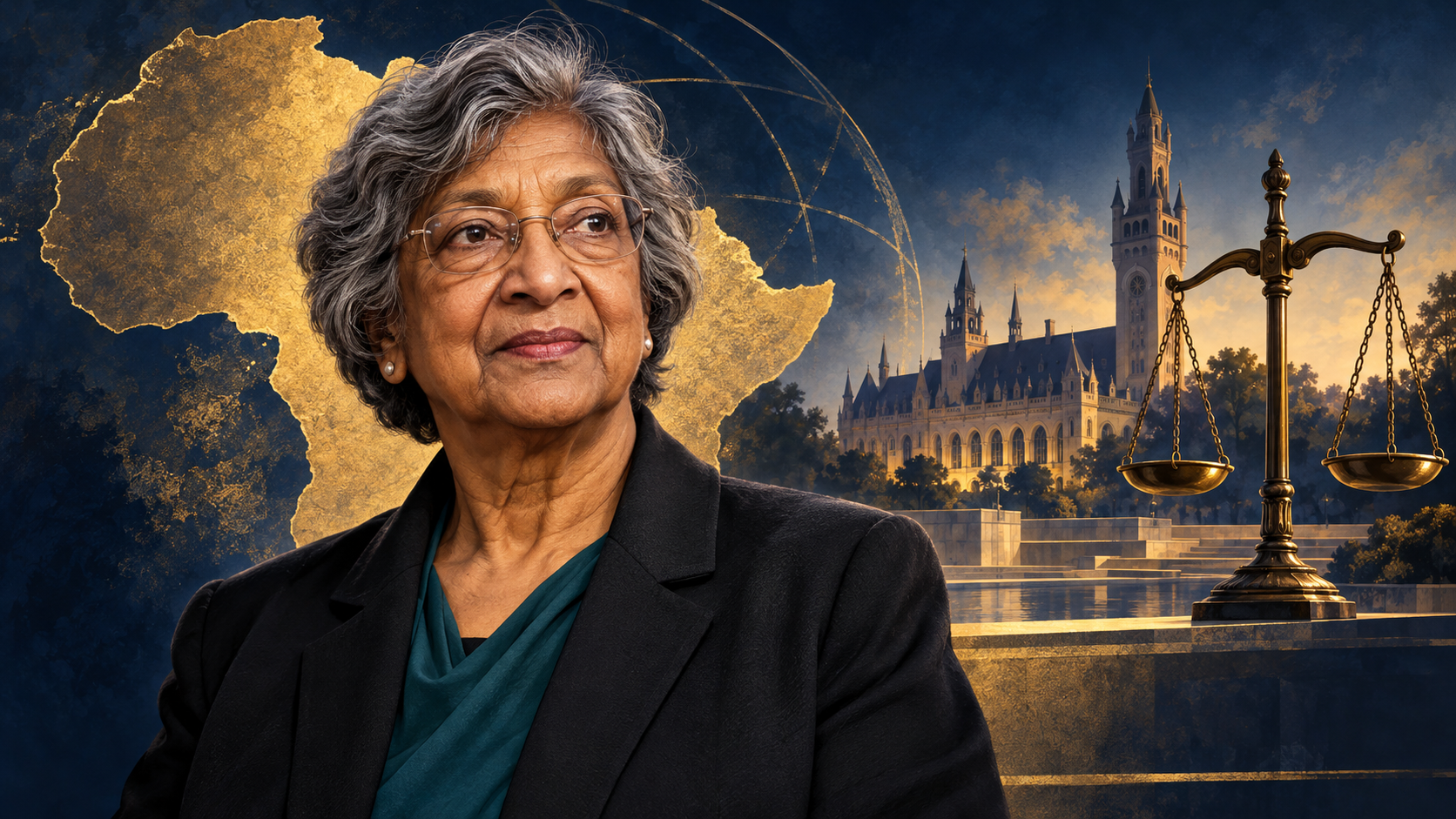
When Navanethem "Navi" Pillay was named the 2026 Nobel Peace Prize laureate, the award did more than honor one remarkable legal career. It placed an African woman, shaped by apartheid South Africa and forged in the language of law, at the center of a global argument about justice itself.
The Norwegian Nobel Committee awarded Pillay the prize for her efforts to promote peace and international law. That recognition matters because Pillay's life has never been abstract theory. It has been a long movement through systems that once excluded her, then eventually had to make room for her voice.
Born in South Africa, Pillay became a legal pioneer at a time when race, gender, and power were designed to tell women like her where they did not belong. The International Criminal Court's biography notes that she became the first woman to start a law practice in Natal Province and the first Black woman to serve on South Africa's High Court. Those milestones are not ceremonial footnotes. They are part of the infrastructure of modern African achievement.
For ADUNAGOW readers, that is the deeper story. Pillay's Nobel win is not only a South African success. It is a diaspora-relevant story about what happens when African legal experience travels into global institutions and helps shape the rules that powerful countries, armed groups, and governments are supposed to answer to.
Her career moved through some of the defining legal institutions of the modern era. She served as a judge at the International Criminal Court, as the United Nations High Commissioner for Human Rights, and in other international legal roles. The UN's Nobel profile highlights her contribution to peace and international law, including her later service connected to genocide proceedings at the International Court of Justice.
That is why the timing of the award carries weight. Pillay is being recognized at a moment when international courts and human rights systems face intense political pressure. The same day the Nobel was announced, AP reported that the United States announced sweeping sanctions on the International Criminal Court. That juxtaposition sharpened the message: one part of the world was honoring international legal accountability while another was moving to punish one of its key institutions.
This is where Pillay's story becomes bigger than a prize ceremony. For many African countries, small states, displaced people, and communities with limited power, international law is often one of the few languages available when violence, occupation, discrimination, or state abuse crosses borders. It is imperfect. It is contested. It has failed many people. But abandoning it leaves the weakest with even fewer tools.
Pillay's life also challenges a lazy idea that Africa is only a subject of global justice. Africa is also a producer of legal leadership. African lawyers, judges, activists, investigators, scholars, and survivors have shaped the international system, from anti-apartheid struggle to genocide accountability to human rights advocacy.
That is the point ADUNAGOW should not miss. Pillay's win belongs in the same frame as African science, business, sport, art, and technology achievements. It is part of the continent's global contribution. The difference is that legal leadership is quieter. It does not always trend like music, football, or tech funding. But when the world faces questions of war, genocide, political violence, and human dignity, the people who know how to defend law matter.
For the diaspora, her recognition also carries a personal lesson. Identity is not only performance, fashion, food, music, or language. It is also the memory of struggle turned into professional authority. Pillay's career came out of a South Africa where law was used to enforce oppression. She then spent decades using law as a tool to challenge impunity. That arc is powerful because it transforms historical pain into global responsibility.
The Nobel Peace Prize will not settle the arguments around international justice. It will not erase double standards. It will not make powerful governments suddenly welcome accountability. But it does give the world a name, a career, and an African example around which to ask better questions.
Who gets protected by international law?
Who gets investigated?
Who gets ignored?
And who gets punished for insisting that the rules should apply to everyone?
Navi Pillay's Nobel win is bigger than one prize because it reminds the world that African leadership is not waiting for permission to enter global history. It is already there, writing judgments, challenging power, and insisting that peace without justice is too fragile to last.
Discover more from ADUNAGOW Magazine
Subscribe to get the latest posts sent to your email.