South Africa's Migrant Raids Test the Meaning of African Unity
As anti-migrant protesters pull alleged undocumented foreigners from homes, the crisis raises a harder question for Africa: how do nations enforce immigration law without turning African workers and families into targets?
South Africa's latest anti-migrant actions are more than a domestic immigration dispute. They are becoming a test of whether African unity can survive economic pressure, weak governance, and the temptation to turn vulnerable workers into public targets.
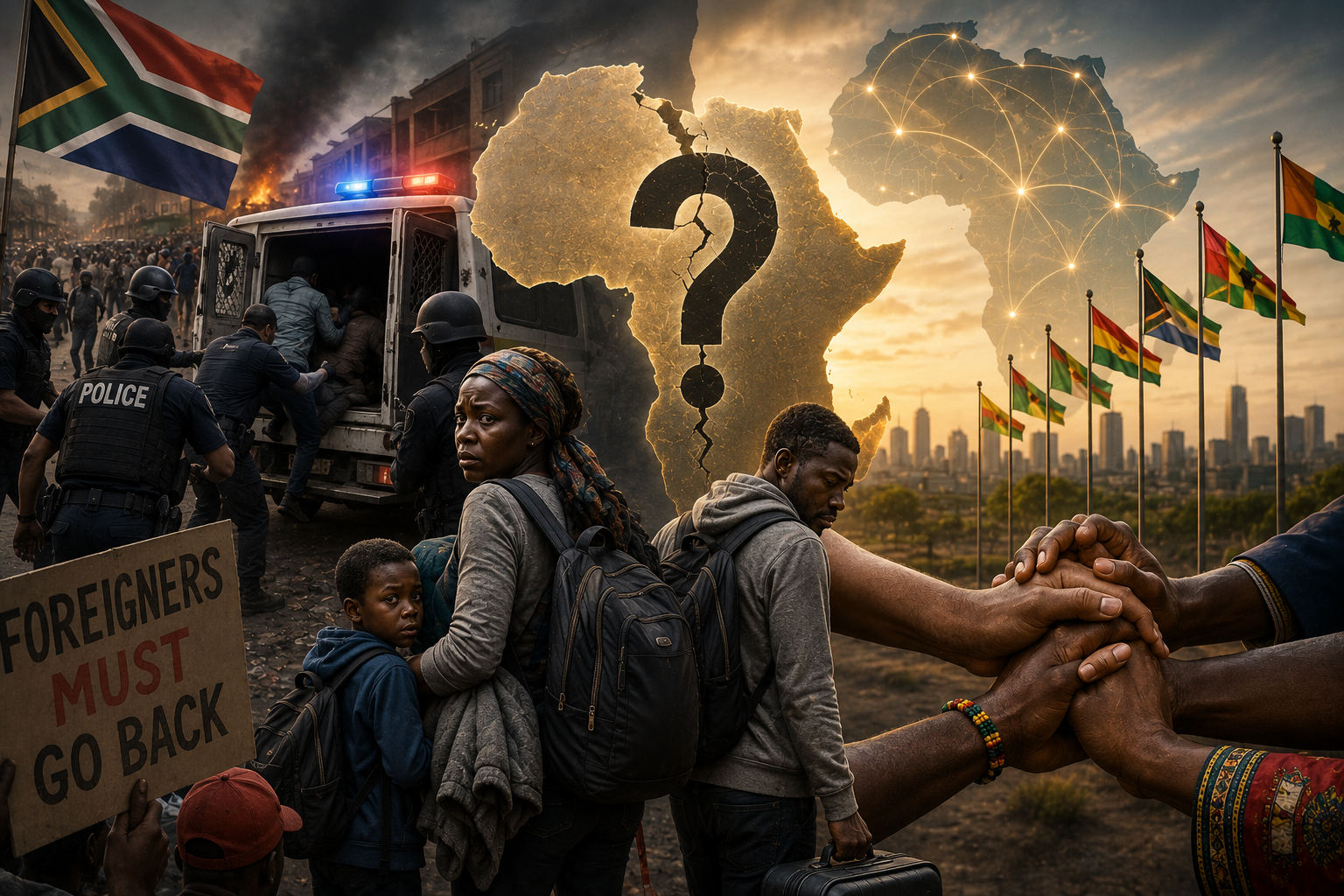
On Thursday, groups of anti-illegal immigrant protesters moved through parts of Johannesburg, including Alexandra township, pulling people from homes and handing them to police, according to Africanews. Protesters also marched through Soweto, with demonstrations reported in Durban. The action followed months of anti-immigrant tension and an unofficial June 30 deadline set by protesters for undocumented foreigners to leave the country.
The images and reports are alarming because they move the debate from policy into intimidation. A state can enforce immigration law. A community can demand better border management, safer streets, and fair access to jobs. But door-to-door raids by civilians cross into a dangerous space where suspicion becomes punishment before law has done its work.
South Africa's frustration is not imaginary. The country hosts more than three million foreigners, just over five percent of its population, while unemployment remains above 30 percent. In many communities, residents feel squeezed by joblessness, crime, housing shortages, and weak public services. When government fails to manage those pressures clearly, anger often searches for the nearest visible target.
But that target is increasingly another African.
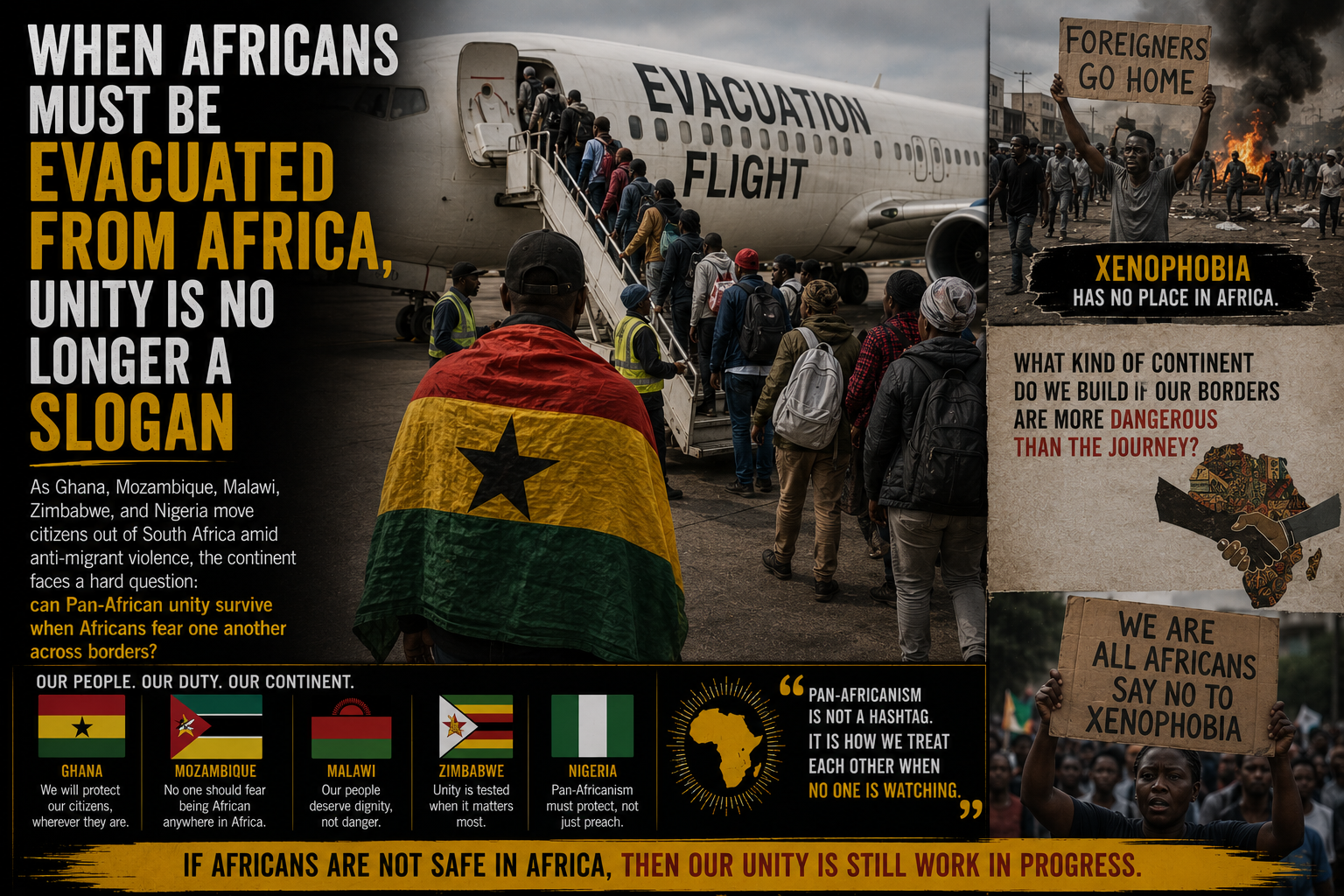
That is why this moment matters beyond South Africa. Nigeria has said the situation for foreigners in the country is deteriorating. AP reported that two Nigerian nationals were killed in June during anti-immigrant violence. Africanews reported that thousands of people from Ghana, Nigeria, Malawi, Zimbabwe, and Mozambique have fled South Africa in recent weeks.
For the wider African diaspora, this is not a distant headline. It affects students, traders, truck drivers, small business owners, professionals, domestic workers, and families who move across the continent to survive and build. It affects how Africans see each other in moments of scarcity. It affects whether pan-African language has meaning when ordinary people are frightened, unemployed, or unprotected.
The challenge is to hold two truths at once.
South Africans have a right to expect serious immigration governance, secure borders, and a labor system that does not exploit undocumented workers or undercut local communities. Migrants also have a right not to be hunted, beaten, collectively blamed, or treated as criminals because of nationality, accent, or appearance.
The line between lawful enforcement and mob pressure is not a technical detail. It is the line that keeps a society from turning pain into persecution.
South Africa has seen this danger before. In 2008, xenophobic attacks killed more than 60 people, according to AP. The memory of that violence should make today's escalation a warning, not a routine news cycle.
African governments also have responsibilities they cannot outsource to slogans. Sending countries must protect their citizens abroad, support voluntary return when needed, and confront the economic failures that push people to migrate under risky conditions. Host countries must enforce law through accountable institutions, not by tolerating civilian intimidation. Regional bodies must treat intra-African migration as a development issue, not only a security problem.
The African Continental Free Trade Area, diaspora investment campaigns, sports diplomacy, creative industries, and pan-African summits all depend on a basic idea: Africans can move, trade, work, collaborate, and belong without fear. That idea weakens every time migrant communities are reduced to scapegoats for problems built by policy failure.
The answer is not open borders without order. The answer is order without dehumanization.
South Africa's crisis should force a continental conversation about jobs, migration, policing, and dignity. If African unity is real, it must be able to face hard questions: Who gets protected when the economy breaks? Who gets blamed when government fails? And how do African nations defend their citizens without inflaming hostility against other Africans?
The raids in Johannesburg are a warning. The response will show whether the continent's language of unity can become a discipline, not just a slogan.
Read Next
- South Africa's June 30 Migrant Deadline Tests Pan-African Unity
- When Africans Become Foreigners to Africans: South Africa's Xenophobia Crisis Tests Pan-African Unity
- Ghana's Emergency Return Flight From South Africa Is a Warning About African Mobility
Discover more from ADUNAGOW Magazine
Subscribe to get the latest posts sent to your email.