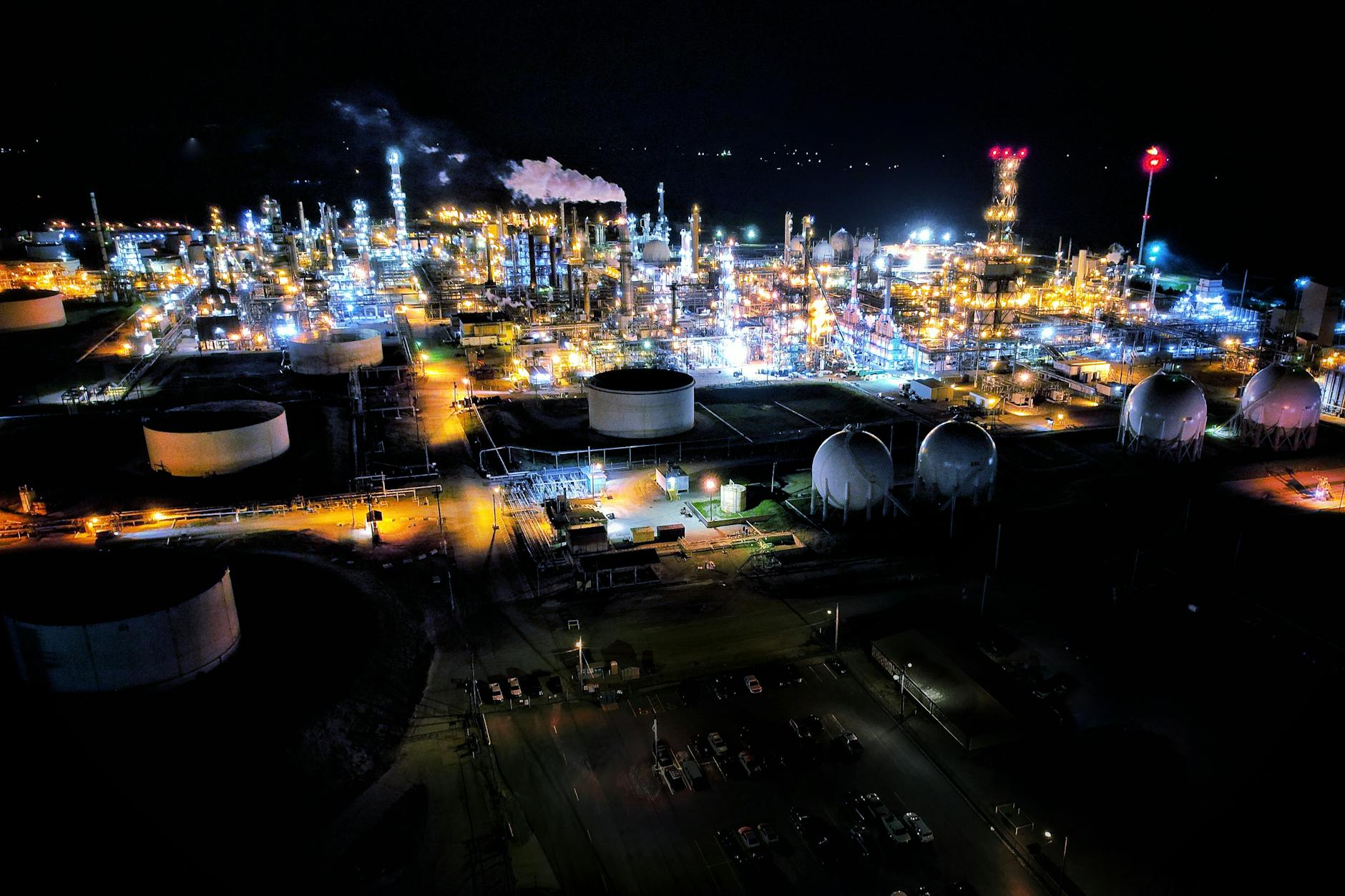
Dangote’s Mega-Refinery Expansion Is Africa’s Biggest Industrial Bet — and a Test of Who Really Benefits
Aliko Dangote wants to build bigger. Again.
The Nigerian industrialist says he plans to expand the Dangote Petroleum Refinery in Lekki from 650,000 barrels per day to 1.4 million barrels per day within roughly three years, a move that would make it one of the largest refining complexes in the world. He also says the project could employ as many as 95,000 skilled workers at peak construction.
On paper, it sounds like the kind of announcement Africa has been waiting for: large-scale industry, local technical jobs, less dependence on imports, and a stronger case for processing African resources on African soil. In symbolism alone, it is powerful. For decades, Nigeria has been a major crude producer that still imported refined fuel at painful cost. Dangote’s pitch is the opposite of that old dysfunction: refine at home, build industrial capacity, keep more value in the region.
But this story is not just about scale. It is about tension.
Because even as Dangote’s refinery is already reshaping fuel flows across the continent, Nigerians are still living with high pump prices, foreign exchange pressure, and an uncomfortable question at the center of the energy debate: if Africa can build the world’s biggest refinery, why does fuel still feel unaffordable?
That is the contradiction that makes this expansion more than a business headline. It is a referendum on what industrial ambition actually delivers.
Dangote announced the expansion during his induction as an Honorary Fellow of the Nigerian Academy of Engineering in Lagos, framing it as a national and continental development play. Local coverage emphasized that the build-out would rely heavily on Nigerian engineers, technicians, and artisans — a detail that matters in a country battling youth unemployment and a steady outflow of skilled workers.
The number grabbing attention is 95,000 jobs. That deserves both excitement and context.
The figure appears to refer to peak construction employment, not permanent refinery operations. That does not make it meaningless. A project of this scale can create a real demand shock for welders, fabricators, mechanical specialists, logistics operators, electricians, safety professionals, and support services. It can also stimulate surrounding sectors: housing, transport, port activity, maintenance, catering, and small business supply chains.
If handled properly, it could become more than a temporary labor surge. It could help deepen Nigeria’s industrial skills base — especially if apprenticeships, certifications, and contractor development are built into the process. For the diaspora, this is the part that stands out. It is one thing to talk about African talent. It is another to create an ecosystem where technical talent has a reason to stay, build, and lead at home.
That is the upside. It is real.
So is the skepticism.
The first hard truth is that refining more oil locally does not automatically mean cheaper fuel. Nigeria’s downstream market has been reshaped by deregulation, subsidy removal, and currency weakness. Even if more petrol, diesel, and jet fuel are processed locally, pricing still depends on crude input costs, exchange rates, logistics, debt recovery, and market structure. Reuters reporting has already highlighted a live paradox: Dangote’s refinery may be creating opportunities in fuel supply while local consumers and businesses continue to struggle with price pressure.
The second issue is crude supply. This is not a small footnote. Dangote has previously faced constraints in sourcing enough domestic crude, with major volumes tied up in existing arrangements, oil-backed loans, and legacy export commitments. If Nigeria cannot consistently feed its flagship refinery from its own production, the political story of energy sovereignty gets messy fast. Importing crude to run a giant local refinery may still make commercial sense in some scenarios, but it weakens the emotional power of the self-sufficiency argument.
Then there is the question of concentration.
Supporters see Dangote as doing what African states and markets failed to do for decades: build world-class industrial infrastructure at scale. Critics see the growing influence of one private player in a strategic sector and worry about what that means for pricing power, competition, and public accountability. Both views matter. This is why the expansion will not be judged only by engineering milestones or ribbon-cutting speeches. It will be judged by whether ordinary people feel relief.
And that is the political danger for Nigeria’s reform story.
President Bola Tinubu’s broader economic direction leans heavily on market reforms, industrial confidence, and long-term restructuring. Dangote’s expansion fits that narrative almost perfectly: big capital, local production, continental ambition. But citizens do not live inside macroeconomic presentations. They live inside transport fares, generator costs, food inflation, and monthly fuel bills. If Nigeria hosts one of the largest refineries on earth while households still feel squeezed, the symbolism can flip from triumph to taunt.
Still, it would be a mistake to dismiss the project as mere spectacle.
Africa has long been trapped at the bottom of the value chain — exporting raw materials, importing finished products, and losing jobs in the gap. A refinery expansion of this magnitude is a direct challenge to that pattern. It says the continent should not only produce crude; it should process, distribute, export, and capture more of the margins. Dangote’s parallel push for an East Africa refinery also suggests a wider strategic vision: not just a Nigerian asset, but an African refining network.
That is why this story resonates beyond Lagos. It speaks to a broader diaspora frustration with the continent’s economic design. Why should resource-rich African countries keep exporting opportunity along with raw material? Why should industrial capability always be something imported, financed externally, or delayed indefinitely?
The refinery expansion offers one answer: build bigger, build locally, and force the continent upward in the value chain.
But size alone is not victory. The real win would be shared prosperity: better jobs, more resilient supply, lower import dependence, stronger technical capacity, and, eventually, more affordable energy.
That is the standard now.
Dangote’s expansion is not just an engineering project. It is a stress test for African industrialization itself. If it works, it could become a landmark example of what scale, capital, and local ambition can do. If it fails to ease pressure on workers, consumers, and the wider economy, it risks becoming a monument to growth that people can see — but not feel.
And in Nigeria, people are done clapping for ambition alone.
Read Next
- Africa’s Trillion-Dollar Mineral Rush: Who Really Owns the Future?
- Dangote Dangote Refinery Lands U.S. Gasoline Deal: A Win Shadowed by Africa’s Energy Gaps
- “Only Africans Can Develop Africa”: Dangote Urges Bold Investment from Global CEOs
Discover more from ADUNAGOW Magazine
Subscribe to get the latest posts sent to your email.