The Diaspora Distribution Layer Is Being Rebuilt by AI
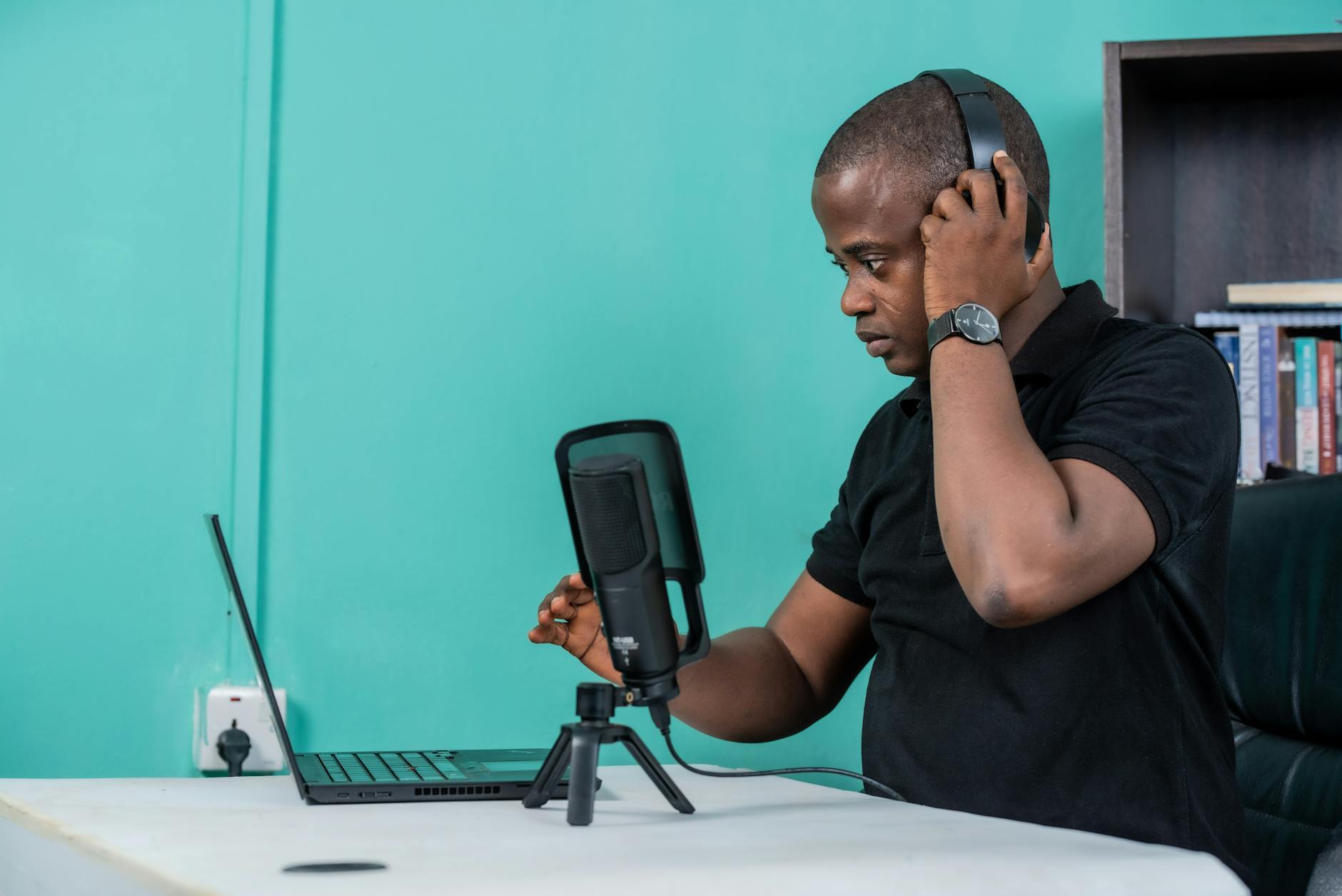
For years, African creators who wanted to grow beyond their home markets faced an old bottleneck: translation was slow, expensive, and usually reserved for bigger media companies. A comedian in Nairobi, a political commentator in Accra, or a podcaster in Kinshasa could build a loyal local audience, yet still struggle to reach diaspora viewers in London, Toronto, Paris, Atlanta, or Johannesburg who wanted the cultural context but consumed most of their media in another language.
That barrier is starting to crack.
AI dubbing and translation tools are moving out of specialist post-production workflows and into mainstream creator infrastructure. That shift matters because it changes the economics of distribution. African creators no longer have to think about multilingual publishing as an enterprise luxury. Increasingly, they can treat it as a growth lever.
The biggest story here is not that AI can magically perfect localization. It cannot. The real story is that “good enough” translation, subtitles, dubbed audio, and translated metadata can now help strong content move across borders much faster than before. In media terms, that is a serious advantage.
YouTube’s own roadmap shows how quickly this is becoming normalized. At Made on YouTube 2024, the company said it would expand automatic dubbing to hundreds of thousands more creators. Its help documentation now says automatic dubbing is enabled by default for eligible creators, can generate dubs for new uploads, and may also add dubs to older videos over time. That is not the language of a far-off experiment. It is the language of platform distribution infrastructure settling into place.
The details matter for African creators. YouTube’s support documentation shows Swahili among the languages supported for dubbing into English, a meaningful signal for East African creators trying to reach global and diaspora viewers who may prefer English audio. Meanwhile, Google announced in June 2024 that it was adding 110 new languages to Google Translate, with about a quarter of them coming from Africa—its largest expansion of African languages to date. That list included languages such as Fon, Kikongo, Luo, Ga, Swati, Venda, and Wolof.
Put those developments together and a clearer picture emerges: the language layer around African storytelling is becoming more machine-assisted, more scalable, and more commercially useful.
This is why AI dubbing should be understood less as a novelty feature and more as distribution arbitrage. A creator can publish first in the language, accent, rhythm, and cultural tone that feels native to their audience at home, then use AI tools to reduce friction for second-generation viewers, pan-African audiences, and global listeners abroad. The opportunity is not just more views. It is faster exportability.
That matters because diaspora audiences are not marginal. The United Nations’ 2024 International Migrant Stock dataset covers origin and destination patterns across 233 countries and areas, underscoring how large and geographically dispersed migrant communities really are. For African media brands, that diaspora is not just an identity category. It is a distribution map.
The most immediate winners may not be only entertainers. Independent YouTubers, podcast networks, churches, educators, activists, and political commentators all have something to gain from making culturally specific content easier to access across language barriers. A Ghanaian current-affairs creator could reach audiences in Britain and North America faster. A Congolese interview platform could open itself to French- and English-dominant diaspora viewers. A Kenyan explainer channel could use AI dubbing to make local analysis more export-ready without rebuilding its workflow from scratch.
Tools are also becoming more creator-friendly. ElevenLabs, one of the leading voice AI companies in this category, markets dubbing that preserves the original speaker’s voice and style, supports automatic speaker detection, and allows transcript and translation editing. That is important because creators do not only want translation. They want translation that still feels like them.
Still, the hype needs boundaries. Auto-dubs can misread idioms, slang, code-switching, proper nouns, and fast speech. Humor often survives subtitles better than flattened voice delivery. Accent and emotion can get softened. In some cases, the best workflow will be hybrid: use AI to create speed, then apply human review to the videos that matter most.
So the real question is not whether AI dubbing is flawless. It is whether it is becoming useful enough to reshape who gets heard first, how quickly, and without whose permission. On that front, the answer increasingly looks like yes.
For ADUNAGOW, the deeper editorial point is this: African stories may now be able to travel globally without waiting to be translated, licensed, reformatted, or culturally filtered by Western intermediaries. The next creator breakout from the continent may not come only from better talent discovery. It may come from better translation infrastructure.
And if that is true, then AI dubbing is not just another creator tool. It is part of a new distribution layer for African storytelling.
Read Next
- The Silicon Savanna: Why Kenyan Developers Are Quietly Outcoding Silicon Valley
- The Visa Wall: Why Falling African Travel to America Is Really a Diaspora Business Story
- When Code Becomes Culture: Who Owns Africa’s Digital Soul?
Discover more from ADUNAGOW Magazine
Subscribe to get the latest posts sent to your email.