By Tristan Kim (DJ Tristan) | Seoul, South Korea
Exclusive Guest Feature for ADUNAGOW Magazine
A Friday Night in Seoul

On Friday evenings, after finishing my work in construction and interior design, I travel to Hongdae, one of Seoul's liveliest neighbourhoods.
During the day, my world revolves around buildings, schedules, materials and technical challenges. At night, I become DJ Tristan, helping to create a small community where people connect through music and dance.
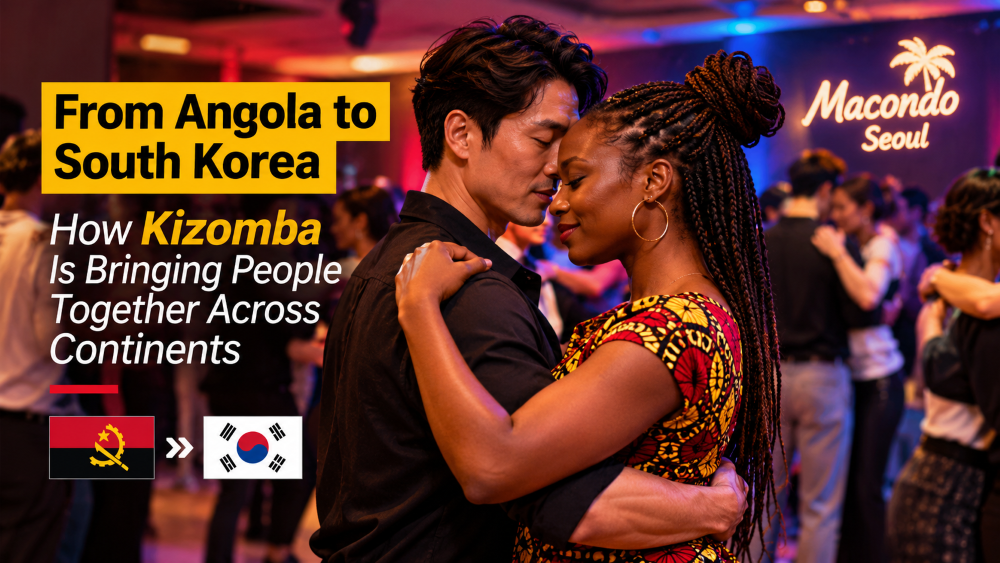
Our gathering takes place at Macondo. Every Friday, and on the first and third Saturdays of each month, people come together for social dancing.
Some arrive with friends; others come alone. Some have danced for years, while others are taking their very first steps.
What brings many of us together is kizomba, a musical and dance tradition with deep roots in Angola.
Thousands of kilometres from its birthplace, this African cultural expression has become a meaningful part of our lives in South Korea.
An Angolan Tradition That Crossed Continents

Kizomba developed in Angola through a rich musical environment shaped by local traditions, including semba, and influences from beyond the African continent.
Its international popularity has introduced audiences around the world to Angolan music, dance and cultural expression.
On April 29, 2024, Angola formally recognised kizomba as part of its national intangible cultural heritage through Executive Decree No. 91/24, reinforcing the importance of preserving and promoting this cultural tradition for future generations.
For those of us who encounter kizomba outside Africa, that recognition carries an important message: behind the music we enjoy is a cultural history that deserves to be understood and respected.
I am Korean. I did not grow up in Angola, and I cannot speak on behalf of its cultural traditions.
What I can describe is how an art form originating thousands of kilometres away became meaningful in my everyday life.
Learning movements is only one part of appreciating a dance. Understanding its origins, recognising the artists who developed it and respecting the communities that carry its traditions are equally important.
As an organiser in Korea, I hope to deepen our connections with Angola rather than simply borrow from its culture.
When Strangers Become Friends

At Macondo, an evening may begin with an open dance lesson.
A teacher demonstrates a movement. Participants practise, occasionally lose the rhythm, laugh and try again. Experienced dancers help beginners become more comfortable.
When social dancing begins, music fills the room. People who may never have spoken before begin communicating through movement.
Yet some of the most meaningful moments happen away from the dance floor.
Two people who met during a lesson continue their conversation over food. Someone who arrived alone discovers new friendships. A beginner returns the following week because the atmosphere felt welcoming.
We sometimes prepare fruit, dumplings and other simple refreshments. These small gestures help transform the gathering into something more than a dance class or nightclub.
Our guiding phrase is "Escape the algorithms."
Technology helps us organise events and remain connected internationally. But no recommendation algorithm can fully replace a conversation, an invitation to dance or the feeling of being welcomed into a community.
In an age increasingly shaped by artificial intelligence and digital interactions, I believe these human encounters deserve greater attention.
Respect Comes Before Dancing

Partner dancing involves closeness, but mutual respect does not happen automatically.
Everyone must feel free to accept or decline an invitation. Beginners need space to learn without embarrassment, and experienced dancers should remain attentive to their partners' comfort.
These principles become especially important when a cultural tradition travels far from its origins.
Enjoying kizomba does not mean understanding everything about its history. Angolan traditions and the different styles taught internationally are not always identical. Those differences deserve curiosity, research and an openness to learning rather than assumptions.
I would welcome opportunities to learn directly from Angolan musicians, dancers and educators, and to hear their perspectives on the worldwide popularity of kizomba.
Appreciating another culture should also mean recognising the people who created, developed and preserved it.
Beyond Seoul: Another Dance Floor in Gimcheon

My other dance community is in Gimcheon, a smaller South Korean city where my family has longstanding connections.
There, we organise a monthly gathering called Gatsby, usually on the fourth Saturday of each month.
In Hongdae, visitors may discover nightlife simply by exploring the neighbourhood. In Gimcheon, people often make a deliberate journey to attend a gathering.
Organising an event means giving them a reason to make that journey.
In October 2026, we celebrated Gatsby's fourth anniversary. Watching people dance together in a provincial Korean city reminded me that international cultural exchange does not belong exclusively to major capital cities.
Music connected to Angola can bring people together in smaller Korean communities, too.
But Gatsby is not an Angolan cultural centre. It is a Korean gathering influenced by a tradition whose origins we have a responsibility to acknowledge.
What Cultural Exchange Should Really Mean
I hope our connection with Angola eventually develops beyond playlists and social evenings.
There are opportunities for conversations with artists, exchanges between teachers and dancers, and deeper learning about Angolan musical history.
That exchange should not be one-directional.
African cultural creators deserve recognition, meaningful participation and opportunities to benefit from international appreciation of their work.
As kizomba continues to reach new audiences, those of us organising gatherings outside Angola have an opportunity to think about how we can contribute to that exchange.
I cannot speak for every Korean dancer, nor can I speak for Angola. I can share my own experience and consider what I can do better.
After the final song at Macondo or Gatsby, the lights come on and everyone returns to ordinary life.
Some will meet again the following Friday. Others may travel to Gimcheon the next month.
What remains is more than a memory of dancing.
It is a small human connection made possible by music that crossed continents.
For that, I owe a great deal of gratitude to Angola.
Photos credit: Tristan Kim / PG Global Insight
About the Author
Tristan Kim (DJ Tristan) is a South Korean construction and interior design professional who organises social dance gatherings at Macondo in Seoul and Gatsby in Gimcheon. Through music, photography and community activities, he explores everyday life and human connections in South Korea.
He writes and photographs for PG Global Insight: https://pgglobalinsightblog.wordpress.com/
Editor's note: This article is a first-person cultural perspective contributed to ADUNAGOW Magazine and edited for clarity and readability. It reflects the author's personal experiences in South Korea rather than representing the views of Angolan kizomba practitioners.
Discover more from ADUNAGOW Magazine
Subscribe to get the latest posts sent to your email.


